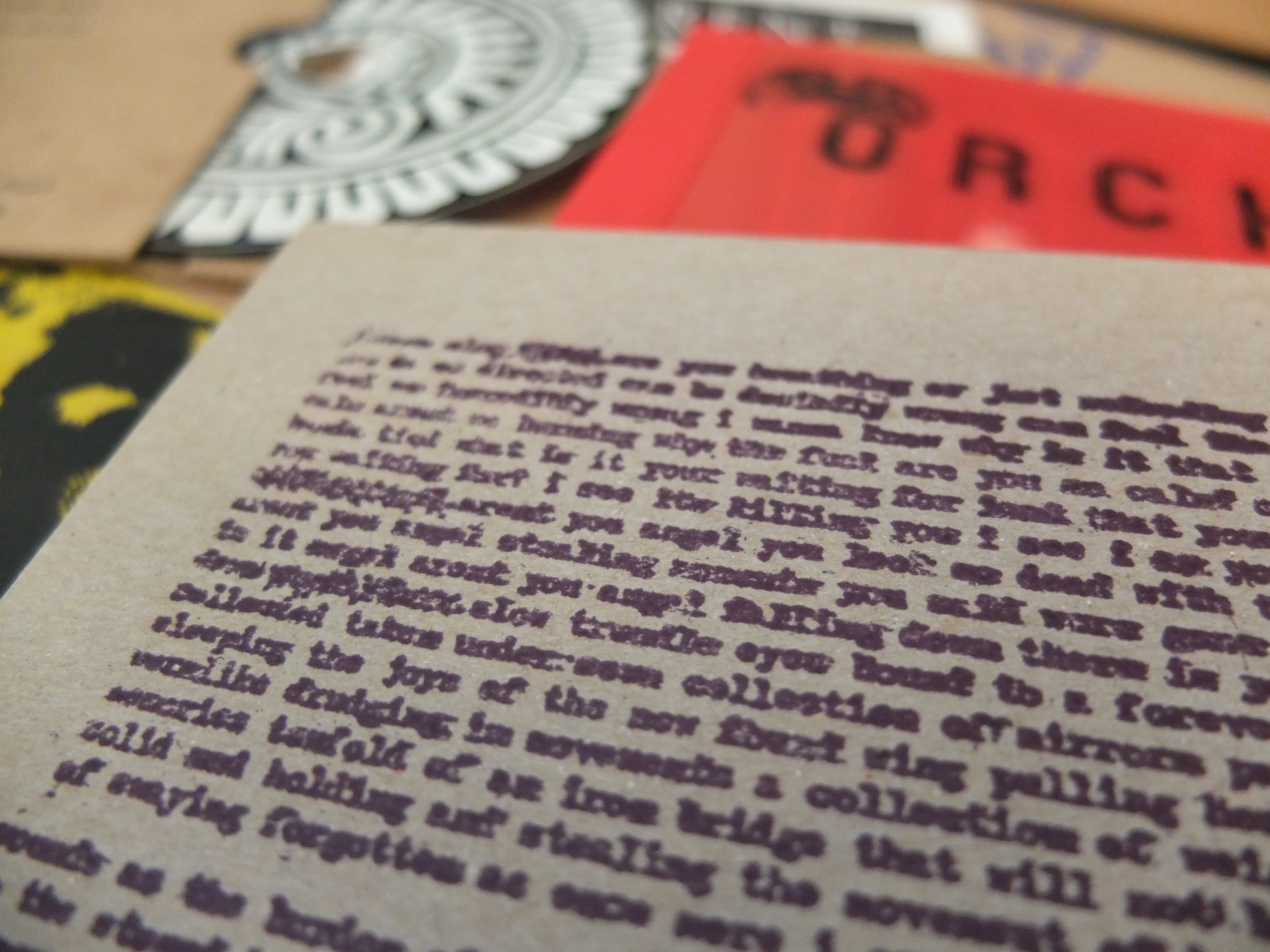
How sustainable is a punk archive?
More than a few have come and gone and do doubt may more will follow that same path.
What factors help an archive to survive?
I have already told the story about the Punk Zine Archive that was once associated with Operation Phoenix Records. I naïvely thought that if I stumbled across an archive of HeartattaCk zines digitized, they would be there the next time I looked. I was wrong. Digital archives can disappear just like much of my paper collection of zines did when I moved across the country.
This story about the fragility of digital archives has been repeated more recently. Rina Garcia Chua had composed an article on the topic of sustainability, comparing the disappearance of The Punk Zine Archive and The Punk Archive. Only, now no trace exists of the Punk Archive. I did, however, discover the wonderful new and exciting looking Punk Archive Initiative. Punks Is Hippies used to be a great blogspot that hosted a bunch of zines. Then it became a website. Now it is neither. I find myself creating lists of websites that I want to feed into Site Sucker so that if they disappear, their contents might live another day. As if I have the time to do that; as if I have the time to repackage those materials and present them to the world again.
The sustainability of DIY archives is a problem. Is it only a problem for punk historians? Maybe, but I tend to think that anyone who cares about the histories of punk and keeping its past in conversation with the present is a punk historian. I don’t think this is a special problem that matters only to the academics.
This is our culture and our past and it would be great to be able to discover it again and share it with others as well as let it inspire new generations the way that music and zines of earlier generations inspired me.
I have to admit, part of me has always had some doubts about archiving. Maybe archives should not last. Maybe a digital archive can be just like a zine: it serves the people who discover it and sustain it. Maybe things are meant to last forever just because they were created. But the more I see how excited people are to discover part of the past and share it with others, the more I believe in the value of creating usable archives. And I think that is key. These need to be usable. They are not just repositories.
When looking at archives that have disappeared, there are some clear tendencies that one can identify that are likely important for the long-term survival of archives. What does it take to maintain an archive effectively? Obscene wealth, oodles of free time, and an inclination toward technology immediately come to mind! More seriously, those that disappear tend to depend on the dedication of one or two people. DIY has never meant going it alone. Big organizations can mean there is a lot of people doing nothing. So, finding that sweet spot of enough dedicated participants is likely a key. Technology seems to play a part. Blogs were convenient but quickly became stale in format. They offered little flexibility in terms of structure. Websites are becoming easier to build, but the most readily available templates are rarely designed for building archives. And websites are rarely free to maintain. Passion seems to be the key ingredient in keeping things going and the internet is not always the best place to feed one’s mental health and passion projects. I would tend to think that interaction might be an important ingredient. The web was far less social in 2010. Maybe having more contact with users of an archive can help to keep it alive.
Are there ways that archives can be financially sustainable? Are there better models than just trying to sell advertising, even if that is limited to working within punk circles?
Is this where public institutions can play a part?
Losing these digital archives makes me a little sad. Anyone who has digitized punk ephemera knows it is a ton of work. It is terrible to know that this labor is lost and will need to be duplicated in the future. I take these things personally because I believe that if we want this, we have to be the ones to do it. And I am sad because I know that I don’t have the time and energy to do more than what I can do. There is so much that people are digitizing and preserving, but there is no central repository for this material.
What if there was? What if it was zines and other ephemera? What if music could be housed there and redistributed? What about a public cultural history project online? Could this be supported by universities that do not act as gate-keepers but instead facilitate the collection and redistribution of digitized materials?
By George Grinnell
Being a hardcore fan made it ok to not be girly and to not be interested in romantic and sappy pop songs and I still get a buzz when I listen to my old records and the words of the songs still resonate.
Sarah Attfield
 Punk Pedagogy