Hippie
Critz and Kelowna Punk since 2000
A conversation between Roy Robins, aka Mr. Awesome, and Ari Cipes

Roy Robins is a musician and pillar of the Okanagan punk scene in BC since the late 1990s. He is a member of Hippiecritz and performs as the solo artist Mr. Awesome.
In this 2022 conversation with Ari Cipes, Roy discusses some of the history of punk in the Southern Interior of BC, a region that has always been the unceded ancestral territory of the Syilx Okanagan People. Roy discusses his multiple bands, recording and creating DIY releases, touring, holding punk shows at Ye Olde Skinning Shack, a DIY venue he created on family property on Duck Lake Indian Reserve 7 with the help of his “attorney,” a friend who earned that nickname by bailing him out of jail more than once.
In 2023, Hippiecritz played again for the first time in years.

Ari: Okay, I am here with Roy Robins, AKA Mr. Awesome.
Roy: Hey!
A: So, I’ve never interviewed anybody before. You were saying the last time you were—
R: Last time I got interviewed for anything music related was for a fanzine like ten or eleven years ago. It was just up the road here at Lake City Bowl, for a girl’s high school fanzine. It was part of her art project, I think.
A: They used to throw shows behind that bowling alley, right?
R: At the Brooklyn Lounge, yeah.
A: Right, the Brooklyn Lounge. It seemed like kind of an underground thing, like I never heard of shows advertised there, or anything like that.
R: No, it was. They found a couple promoters who tried to make it work. And because it’s way up here, and back then we were only downtown-based…we couldn’t figure out how to get up there. I saw Bunchoffuckingoofs and Dayglo Abortions there on Halloween. It was amazing, but there were maybe 25 people there because it was a last minute. Sky came in—Sky from Hippiecritz— and he’s like “hey, BFG and Dayglos are playing,” I’m like “let’s go!” We get there, and there’s like twenty other people, it’s like, what’s going on? And that was a metal promoter, her name was Christina Killchrist.
A: That’s quite a handle.
R: Yeah, that was her “scene name.” She used to put on all these old metal shows. Like she brought Nevermore here, and like Macabre came here. And like Anvil came here a few times because of her. But she just couldn’t find the audience.
A: That’s kind of been the way in Kelowna though, hasn’t it?
R: Oh yeah
A: It seems like every five years or so there’s some awesome promotor who comes in, and like, puts a lot of energy into the scene, and starts to get something going, and then it fizzles out.
R: Well, then they realize that no-one wants to go to shows. That’s all it is. People are just like “I can’t wait to go to shows.” “Hey, I’m playing tomorrow.” “Hey, you know what, I don’t need that shit. The Witch season two came out, I’m just gonna watch that.” I played a show last Saturday and it was like pulling teeth to get Sky and Max to show up. And they’re my best friends! What’s going on here? It hasn’t changed. I was gone for four years. In Saskatoon you tell someone, “hey, I’m playing tonight, last minute.” “Sweet, I’ll see you in an hour.” And then the whole team shows up.
A: I don’t know if you ever met or remember hearing about Conor Mack and the Stolen Organ Family Band.
R: Yeah
A: When we toured, Saskatoon was like one of the best towns we played in.
R: I know, I know.
A: We played at some house, I can’t remember. There was a lady that ran it. She fed us omelettes in the morning and everything…
R: What year was that?
A: 2009.
R: Oh, that’s way before I got there. But yeah, we played a house party there in 2011.
And there was like 70, maybe 80 people there in this little house. This little house was built in like 1920. Everyone was there. Everyone who was into punk rock for that week was there. It was awesome.
A: Okay, so I have some questions. What was your introduction to punk? How did you find it?
R: It was word of mouth, and just seeing people. When I first heard the Ramones, I was maybe eight years old. Because my older brother would record music videos on MTV.
A: On VHS?
R: Yeah, he’d make VHS compilation videos. And then one of them was “I Want to Be Sedated.” Their old video. So, I’m like, yeah, that’s cool. It’s not The Beastie Boys! And then of course hearing the Ramones and Motörhead during the “Jock Jams” in hockey. Remember, they would make “Jock Jams” CD compilations. “Jock Jams 2” had Ramones and Motörhead. And they would play that during the Pepsi tournament in like ’94. And then there was Danzig back in ’92 which came out with ‘Mother” so I was like, this is alright. I didn’t know he was a Misfit. I didn’t know anything about that. I was ten years old. But what really got me into it was skateboarding videos. Like “Welcome to Hell.” When I first heard “Welcome to Hell,” it had The Misfits on there, and they had Iron Maiden, but Misfits was the one that really grabbed me. It was “London Dungeon.” And then I failed grade nine that same year. So in ’97, I failed grade nine and my parents are like for punishment you’re going to Immaculata High School, which is where my sister went, it’s a catholic school. I was from George Elliot [High School], and we were all still listening to Wu Tang Clan, you know, so I was like right out of my element. But there was a couple kids there that had the plaid pants, had the studs. Mohawks, you know, silly hair. And one of them was wearing a Rancid shirt. You know, the “Out Come the Wolves” album. That’s pretty cool. That’s nothing I’ve ever seen before. And, I didn’t have any internet back then, so I was at the music store and I was looking at the punk section, and the dude is like “you want anything?” I’m like, “there’s one that’s got the red logo” and he’s like “what, Rancid?” But that tape was eighteen dollars, I had thirteen bucks at the time. He says “you can get this NOFX one for eleven dollars.” Sold! It was “So Long and Thanks For All the Shoes.” I started listening to that and then I started casually talking to these kids. And then one them—her name is Serena, she still lives in West Bank and hasn’t been in the scene since high school, really—she gave me a mixtape to check out. Exclaim Magazine was always available at A&B Sound, so I flipped through the punk section of reviews. And I always just read the reviews to find bands to look for. I still actually do that. You know, it’s just the old man in me.
A: You still read Exclaim?
R: Yeah, well I’ll flip through the one page now. Or just go on their website. I’m a creature of habit, right?
A: Yeah, so what’s happening with punk now, then?
R: It’s still here. It’s still around, you just gotta look for it now. Because you won’t find a flyer on the pole anymore, or you go to the record store or coffee shop and see the flyer. It’s all social media based, right? Like there’s a show in Kamloops this Saturday. An all-ages Chain Whip, Bootlicker show. And I found that out through Facebook, obviously, so I was like, I’m going to that. I don’t care; I haven’t been to an all-ages punk show in Kamloops in probably 23 years, it’s like 1999. And Kamloops actually has a better punk scene than Kelowna.
A: Has Kelowna ever had a good punk scene?
R: It did. Yup, yup, in the 90’s. I hate to say it; it was the best in the 90’s up until about 2005 or 2006. Maybe even later than that. Maybe up to 2010.
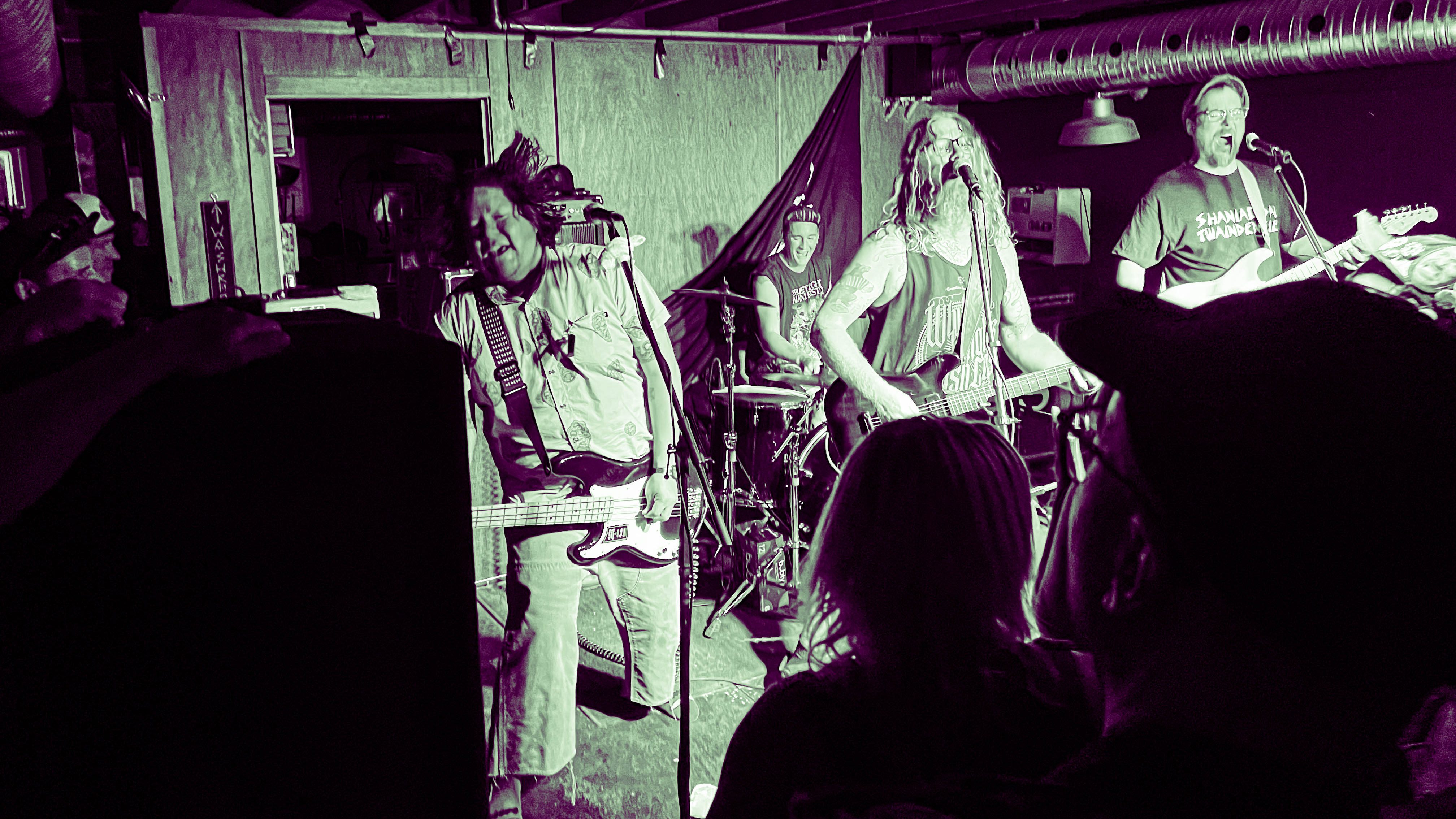
A: Growing up here I saw a lot of metal shows being promoted, and then you guys: I saw Hippiecritz.
R: Well, that was, yeah. That’s Sky and Max, they started that. They started that band. And they were friends with a band called The Tupps, do you remember them?
A: I remember The Tupps, but I didn’t know they were local.
R: Yeah, they were going to Okanagan University College back in the day for writing, or something. And I saw them—I was in a metal band at the time called Stabbed in the Face. We were this Winfield Death Metal band. And I loved all music, of course, so I would go to punk shows and metal shows. Just be an asshole, right? That’s just who I was back then. Then I ran into Hippiecritz and I was like, “I love you guys.” And I was really good friends with their first drummer, Phil. He was like one of my boys from way back in the day. So, we would hang out, and then they went through about three bass players in their first year in 2003. And then at the end of that year, I remember they came to Winfield, there was a huge Boxing Day party that my friend was hosting and they came. I was playing foosball with Max. And Max said, “if you want the spot, you can have it.” “I’m like what spot?” And he’s like, “bass!” “Yeah, I want it,” and he scored and I lost, and I got to join the band that day.
A: What year was that?
R: 2003.
A: 2003, and then you released an album in 2011.
R: There was the Camletoe demo in ’03 right before I started, then we did a self-titled demo in ’04 recorded by Kaylub, if you remember him. He recorded us in our friend Fran’s abandoned house. Like her and her mom were just moving and said “you can take my house for the afternoon.” So we recorded like nineteen songs, but only used twelve of them, cause the drumming was so shit. Phil was so tired, he just couldn’t do the last seven. So it was just off-key by like a half-step. And then we did the bass, guitar, vocals, and then lead guitar all within that day. And then we recorded an EP with Mark in ’05 in his garage up in Rutland. That was called “Hippiecritz with Hippiepits.” And the cover was this hippy with big hairy pits. It’s stupid. It was a dumb picture we found on a Shambhala flyer. I have that somewhere. Max should have it, though. And then we did an album in Nanaimo, a live album: Live at The Grid. But we never heard it.
A: No?
R: No, the guy recorded it, we gave it to The Tupps, and they released it, and because we were so messed up back then. I think it was on Myspace for a month.
A: Have you ever tried to find it?
R: Yeah, we know where it is. Sheldon from The Tupps has it. He still has a copy. And I asked him, can I take that, digitalize it, and send it to a press and release a 10-inch album of it?
A: One of the things that’s really interesting about studying punk is that everybody has a different idea of what punk is and where it comes from, and all this stuff, but also, you basically have oral histories, like what we’re creating here, and you have memoirs. All of these pieces of ephemera, all of these things that have been made, so many of them are lost, or just never seen. It would be cool to, you know, compile all these things.
R: Well, that’s what I want to do. I’ve brought it onto myself to be the Hippiecritz historian throughout the years just because Sky’s too busy doing his own thing, Max is already a dad now, and our drummer is just trying to make it through the day. And I got nothing to do, you know; I’m a janitor in the night time, so if I don’t write Mr. Awesome songs, I’m flipping through old photos, and then I’ll do a “Throwback Thursday”: here’s us in ’05, here’s us in ’10, here’s us a week ago. It doesn’t matter, we’re still here.
A: That’s very cool. Yeah, we need a punk archive.
R: Sky and Max have hundreds of photos I’ve never seen before. They’ve just got it on a file somewhere or they got pictures printed and it’s in an album somewhere.
A: Punk can mean a lot of different things to different people. What does it mean to you to be in punk, or to identify as punk?
R: It means doing your own thing. Without any consequence or any shame for what you’re doing. It just means, like, we come here, we’re having lunch, you know, I’m not wearing a suit, you’re not wearing a suit, we’re doing what feels more comfortable. The most comfortable spot you’re in is where I think punk is. And punk is about how encouraging everyone is of that. There’s a lot of other cliques: like when I was growing up, the jocks, for instance, the academic kids, they looked at me and they would think, that guy’s a hobo. You know, “he can’t even afford his lunch, the Indian Band pays for it.” Which is true, but that’s just my dad saying “hey, if the Indian Band is gonna pay for your lunch, I’m gonna let ‘em!” Definitely. You go to the shows, and you see everyone; they all look different, but they’re all there for the same reason. They’re all there for the music, and that’s the main thing, like it’s a collection of outcasts who finally found a home. And that means a lot to me, you know, because being Indian. The racism was really hard growing up, so.
A: Did you find it was difficult in Kelowna, like there was a lot of racism here?
R: Not in the punk scene. Everywhere else. I played hockey and I was a goon. It was because they were calling me names.
You can only be called “dirty Indian” so many times before you slash a guy in the leg. That never happened in the mosh pit. They’re like, “hey man I like your hair.” “Thanks! I’m taking it back. I’m taking the Mohawk back!”
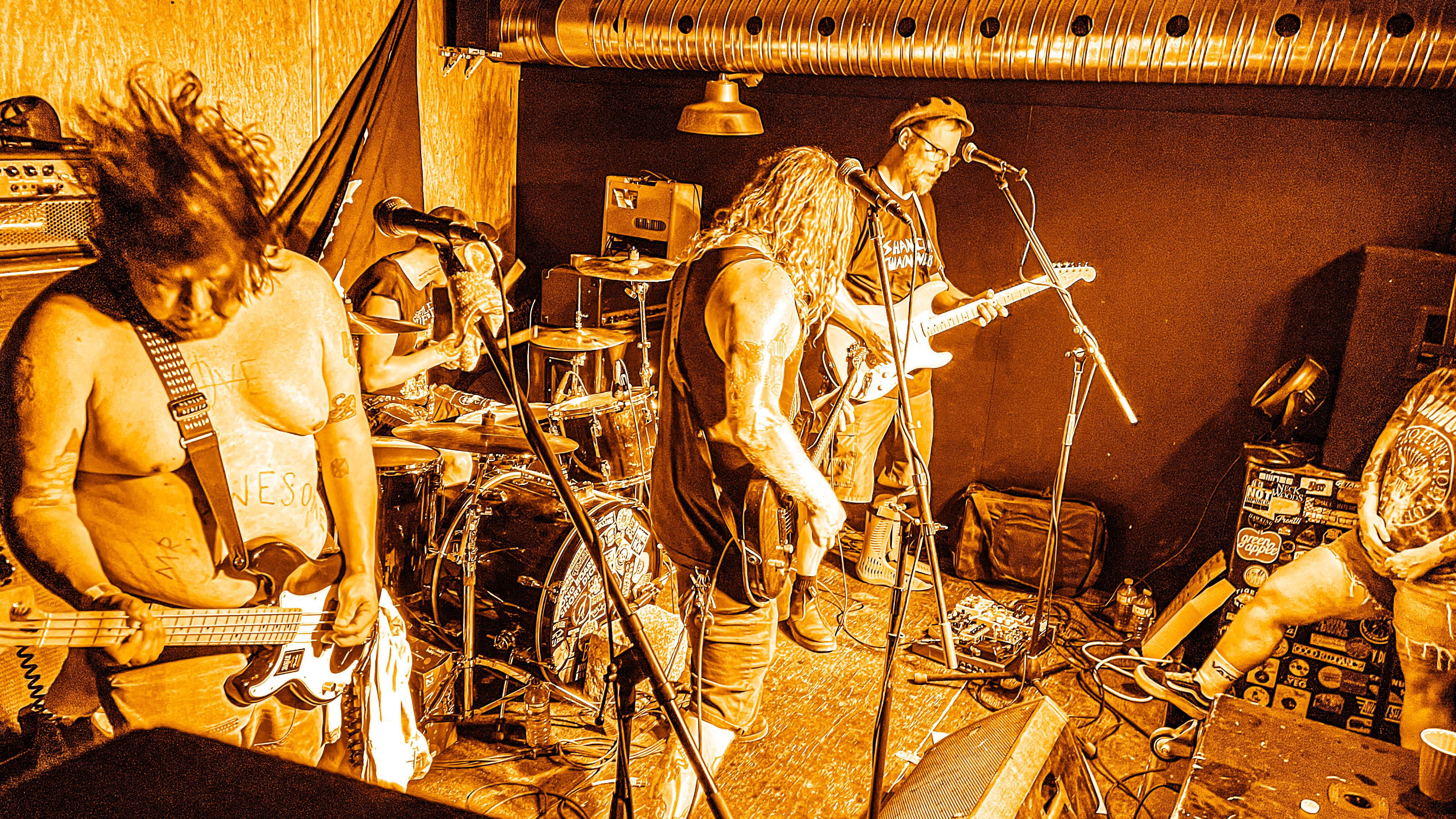
A: We talked about the Hippiecritz. You played in other bands?
R: I’ve been in a lot. Maybe ten.
A: That’s quite a lot.
R: Yeah, first band I was in was a “nu metal” band. It was called Mioga. In like 1999. And I was the only bass player in that age bracket. And then they’re like, “do you want to play in a Korn-based band. Does that fancy?” “I’m not doing anything right now, so sure. But just know I’m not gonna help you write any songs.” When they covered a Korn song, I had to borrow their CD. I’ve never heard this song before. I don’t even know who these guys are.
When I picked up a bass, the one thing I wanted to do was play live music. So that got me through the door to play with other people. Especially with kids my age. It was perfect. And then, I started finding other guys around town who had the same interests.
I was in a Misfits cover band called Spinal Chord. Misfits is all power chords, right, so yeah. And then I was in another band called Rest In Pieces. It was like a hardcore punk band. And then there’s Resistance is Betrayed, and then Corpsicle, and then Stabbed in the Face, and eventually Hippiecritz. And after that even, I was in a band called Bunk, which is “Bad Punk.” We all switched instruments. I played drums in that band. I had never played drums in my life. Phil was the singer/guitar player, you know, Shane was the bass player. And we wrote probably twenty songs in that first, you know, six weeks. Just like, fuckin three chords… We would get a flat of beer, and write on my steps and then just go in there and play it. It was amazing.
A: Did you record any of these projects?
R: With Mioga, yes. Shane has the tapes for Stabbed in the Face. I think he does, anyway, his mom might have them! Corpsicle, and Spinal Chord, not really. Because it was just for fun. And then Bunk, we recorded like two songs, but I’ve never heard them. It was unreal.
A: It seems like there’s got to be just this huge amount of recorded music. Punk from the Okanagan that no-one has ever heard of before.
R: Do you know Kasey from Tiger Moon?
A: Sort of. We’re acquainted.
R: Yeah, she was in a band back in high school called Stalking Bambi, an all-girl punk band. And there’s a Facebook page called Trudy Jane’s Okanagan Songwriters 2000 Plus. And they have a clip of Stalking Bambi playing. They’re like maybe 15-16 years old. That was an old punk band that never probably got any recording done. And then there was DFY in Penticton, Robert’s band. I think they put out one CD. But they probably wrote maybe 25-30 songs. But that’s before recording became almost like what you’re doing now with your phone. You know, it was always just a tape deck. Or a 4-track with a cassette, before computers were even around, so a lot of it was lost through time. But a lot of bands didn’t even want to be recorded. It’s just it’s for fun. It clears their head. And that’s what I do with Mr. Awesome. It clears my head.
A: Do you think that people don’t want to record their music because as soon as you do that it signifies that you’re trying to take it seriously?
R: Oh yeah. It’s that next step in trying to “make it.” Make a demo and then see who wants to hear it. But also, it’s fear of rejection, too. My first Mr. Awesome recording is called “Bigger Than Jesus” in 2005. I made 100 CD’s. And I think I sold them all within a year and a half. Which wasn’t too easy, but it wasn’t too hard. But for my next album “Ghost Songs” a lot of people said “no, I’m good.” That hurts. This is part of me that I want to share with you. You can even have it for free. “You know what Roy? I’ll give you five bucks just to hold onto it.” And that hurts. But you get thick skin eventually.

A: As a musician, I’ve played in bands and tried to do it seriously, and on some level, I still am, but now with the stuff that I write outside of my band, I’m just kind of casually recording it because, what else am I going to do with it? I’m not performing, I don’t have a band to play it with, and it just it fulfills a creative impulse to do it.
R: Absolutely. About three years ago, I was going to call it quits. I was going to release one more and say “I’m done. I quit everything.” My friends are like, “what’s wrong with you, that’s the dumbest thing you can do right now.” “Well, what else am I going to do with it?” This is right before covid hit, and they said, “just keep writing. Even if you don’t record it, just keep writing.” I have got journals of songs that I’ll never record, but those songs meant something near and dear to me at the time, so. I might just open them up and say you know what, I’m gonna record these thirty songs this week. “If you wanna hear them, go for it, if you don’t, I’m not too worried about it.” I’ve accepted the fact that no one wants to hear Mr. Awesome.
A: I don’t know about that, man. I mean, I’ve been listening to the self-titled EP that you released this year. I think it’s great!
R: Thank you.
A: I listened to it again because we were doing this interview, and I’ve listened to it four other times since. Just because I wanted to know it more deeply. I think they’re great songs.
R: Thank you, I appreciate that. I wrote those songs from November 2019 to May 2020, and recorded them in July. I just sat on them for a year and a half. And then finally I decided that I have to get these mastered. Kaylub mastered them because I was going to get them pressed on vinyl, but then the vinyl industry is so swamped.
A: So let’s talk about regionality. There’s this idea that punk is different from place to place. In DC, it was super political; it was all born of upper-middle-class kids whose parents worked in government, so punk had a specific direction and purpose. Do you think that there’s something unique about the Okanagan and what this place does for musicians, or what musicians do for this place?
R: It depends on how you look at this place, right? You can look at this place and say this is boring, I hate it here. And then write about that. What am I gonna do? I don’t want to go swimming. I don’t want to go skiing. That’s a song right there, right? And then other people can look at it and be like “fuck man, I love skiing, I love snowboarding, I love going in the lake.” I’m gonna write about that. And it’s just different outlooks. I love it here. I grew up here, obviously. But I just started writing songs about this place. For the longest time I was writing nothing but songs about serial killers and zombies and horror movies.
A: That’s fun stuff.
R: Yeah, it was good, but then it loses a little bit of its soul, you know? I mean people can’t relate to it as much as they want. And I also pivoted my mind frame. I want to write you a song that you can hear and be like you know what, I know what that guy’s going through. I wrote a song last month called “I Fell in Love at Scandia Golf and Games.” And I played it last weekend at Copper Brewing. And this lady she was sitting there, she’s like that Scandia song really touched me. It should! It touched me.
A: So, we talk a lot about the DIY ethos around punk. Obviously, it’s not exactly a commercial endeavour. It’s not something that people really do to make money. And yet that DIY community-oriented way of doing things, it really defines punk. I would say almost more than anything else. What’s your experience been like with DIY?
R: That’s how it’s always been in my books. If you’re not on Epitaph or Fat Wreck Chords at the time, you weren’t on anything. So, you’d have to do it yourself. You’d have to book the hall, you’d have to record with your own money, and you’d have to sell something to get it. Or you had a friend or an uncle that could take care of that for you, someone who would do it for a favour. Or you could make your own show, right? Have a house party. House parties were big. Bush parties were just as big. And yeah, alright well we’ll borrow my dad’s generator, we’ll go to this beach, we’ll play about five songs before the cops come, and we’ll have a good old time. We’ll have some beer, have some cigarettes. We’ll smoke some weed. Same with CD’s: a lot of our CD’s were just photocopied. And just even sharpie, like H-i-p-p-i-e-c-r-i-t-z C-a-m-e-l-t-o-e D-e-m-o. And then we’d even stencil. We didn’t have spray paint, so we’d just stencil in with felt-tip markers. Then they had those CD stompers, right? You could get them photocopied, like labels and put it on a CD. And those will work until they got wet, and then they ruin the CD.
But we always did it ourselves. Our first tour in ’04, we spent a whole day making these CD’s. And the sleeves were bigger than the CD. So, they’d shake and get sand in them. We ruined probably 25 CD’s. But we did it ourselves. We always did. We even booked our tours ourselves. We did all that through Myspace. We just emailed bands out of Edmonton, and Regina, in Winnipeg, in Vancouver, and just ask, can we play a show on July 8th? “Hell yeah, I’ll see you there!”
A: That was the birth of a new era, Myspace.
R: Yeah exactly, yeah. That was definitely the birth of a new era. I didn’t have an email address, I didn’t even have a landline back then. Max would have to come into Winfield and pick me up and tell me, “alright we’ve got a show.” Like really? Fuck, what day is it? Stupid!
A: I think a lot about the times that I spent at Ye Olde Skinning Shack in Winfield. I only went there a few times, but it was more of a scene than anything else that was happening in Kelowna. To me, anyway. What was that like? I mean, you lived there, right?
R: Yeah, that was my stage. I built that with my attorney.
A: Okay so the lyrics in your opening track or your new EP, that’s true?
R: That was based out of necessity. We burned all our bridges in all the halls in Kelowna. In Rutland, the Knights of Columbus wouldn’t let us put on shows. The OK Mission Hall wouldn’t let us put on shows. The French Cultural Centre wouldn’t let us host shows. All the bars were starting to say, no, you guys are just too wild. And then we had The Dungeon in Vernon, remember that place? It was this old house behind the Safeway. All the Vernon punks lived at this house. I think it was Chantelle who started it. It was her dad’s house, and she’s like can we host a show here, and he’s just like, you can just live there. So they would book shows every weekend. We’d go out there. And then once that got torn down, now where? And I was talking with my dad one night, I’m like, “hey dad can we have a show at the old house? You know grandma’s house?” Dad’s like “fuck no, you can’t do that. That’s grandma’s house.” I just thought I’d ask. And he’s back to watching wrestling. Then he said, “why don’t you just build a stage out in the yard?” Good idea. And then Kylie happened to be sitting there, my attorney, he said, “I know what to do.” So I followed his lead. We worked at AcuTruss Industries over in Winfield. They build floor joists and there was a pile of unused joists. So, we went up to my old boss, and asked how much for that pile? “You give me two 40s, it’s yours.” “Done!” We thought he wanted 40ozs of Olde English. We come back like “hey, who’s the man!” And he’s like “no, 40s of vodka, dummy.” Oh! “Well, we’ll keep these and we’ll be back.” So we got a 40 each and a truckload of joists. And it’s funny cause as soon as we gave him the booze, he’s like “alright, I don’t see anything.” And we built the stage that night. And then the next night, the Ripcordz came to town, so. Yeah it was crunch time. We just built the stage that day. We skipped work, built the stage. And Sky came up, “where’s the roof?” I didn’t even think of building a roof. He insisted “we should have a roof.” I’m like “well fuck, who’s stage is it then?” “It’s our stage.” “Oh, okay. Our’s then. But I put the work in.” Anyways, that’s just me bitching about Sky cause that’s just what we do.
But yeah, building a stage was something we did out of necessity. We needed places to play. And then after we got the stage up, Max, from Hippiecritz, he was still getting requests to play from touring bands on Myspace. They’re like “hey, we’re coming to town, what can we do, what can we do?” And he just started booking them at the Skinning Shack. He named it Ye Olde Skinning Shack because my dad had his actual skinning shack there for deer.
A: Okay so there’s some truth in the name.
R: Yeah, when we couldn’t practice anywhere, my dad’s said clean out the skinning shack. I called the boys up on my dad’s cellphone and told them to come over— I’ll clean it out, I’ll sweep out all the fur, and the hides, and take care of it. We played in there about four times before they said we gotta find a permanent place because we would have to move all the gear out whenever my dad bagged a deer. When we built the stage nearby, I said, just call it Mr. Awesome’s place. And for a show with The Jolts and Jones Bones, Max put on the flyer Ye Olde Skinning Shack AKA Mr. Awesome’s Stadium. Perfect. We have called it that ever since.
A: Did the police ever come to see what was going on at The Skinning Shack?
R: All the time. Every show. But, because it’s on Indian reserve land, they couldn’t come on the property. So, my dad would always help me with that.
As soon as he saw the RCMP coming he would like wave his hands and say, “hey, this is Crown land, you can’t be here.” So, they’d have to call the Tribal Police. And the only cop at the time was Cecil, who was our second cousin. He’d get the call and he’d call my dad: “you guys partying out there again?” “Yup, but we’ll be done by eleven.” “Alright, I’ll take the long way around. I’ll be there around a quarter after, 11:30, but you better be done.” And we always had it that if you start at seven, three bands, done by 11:30. So, we always made curfew.
We were surrounded by three different mobile home and trailer parks, and the sound just echoed into those trailer parks, so everyone was calling. The police were getting noise complaints every single weekend. But they couldn’t do anything. Eventually the RCMP got smart and they went to a Band meeting, an Indian Band meeting, and they said “hey, we want to see if we can get access to your property in case something bad happens. And the Chief and council thought it was a good idea. They were sly about it, and two of my uncles signed that paper. And then when the RCMP were called during a show—Joey Only Outlaw on tour, maybe July 5th, ’08, so like two years in to holding shows there—and they were walking on the property, and my dad’s ready for the routine, and then they hand him the sheet signed by chief and council saying they can come on the property.
He called my uncle, he’s like “you know what you just did? You just allowed the cops to come on the property.” My uncle replies, “oh, that’s what that paper was? I thought that was in case anything bad happens.” My dad says, “we’re the bad thing that happened!” And we had to cancel the rest of the shows booked for that whole summer. We were booked until October that year. I had to go on Myspace and cancel every band after that. It was like one to two shows a weekend for you know, twelve weeks, right? That sucks.
A: Yeah, major loss.
R: Oh, it was brutal. Even calling people, like, it was heartbreaking. And we just put a new roof on it that year, so. We created something awesome, and then the carpet gets pulled away. But that’s just the way she goes. By then The Grateful Fed was around so we can have shows again here, and then a few years later, you know, Fernando’s opened. At that same time, everyone in Kelowna moved to either Vancouver, Victoria, Edmonton, Toronto… Just left town, like that punk scene of all my peers was gone. All my close friends left.
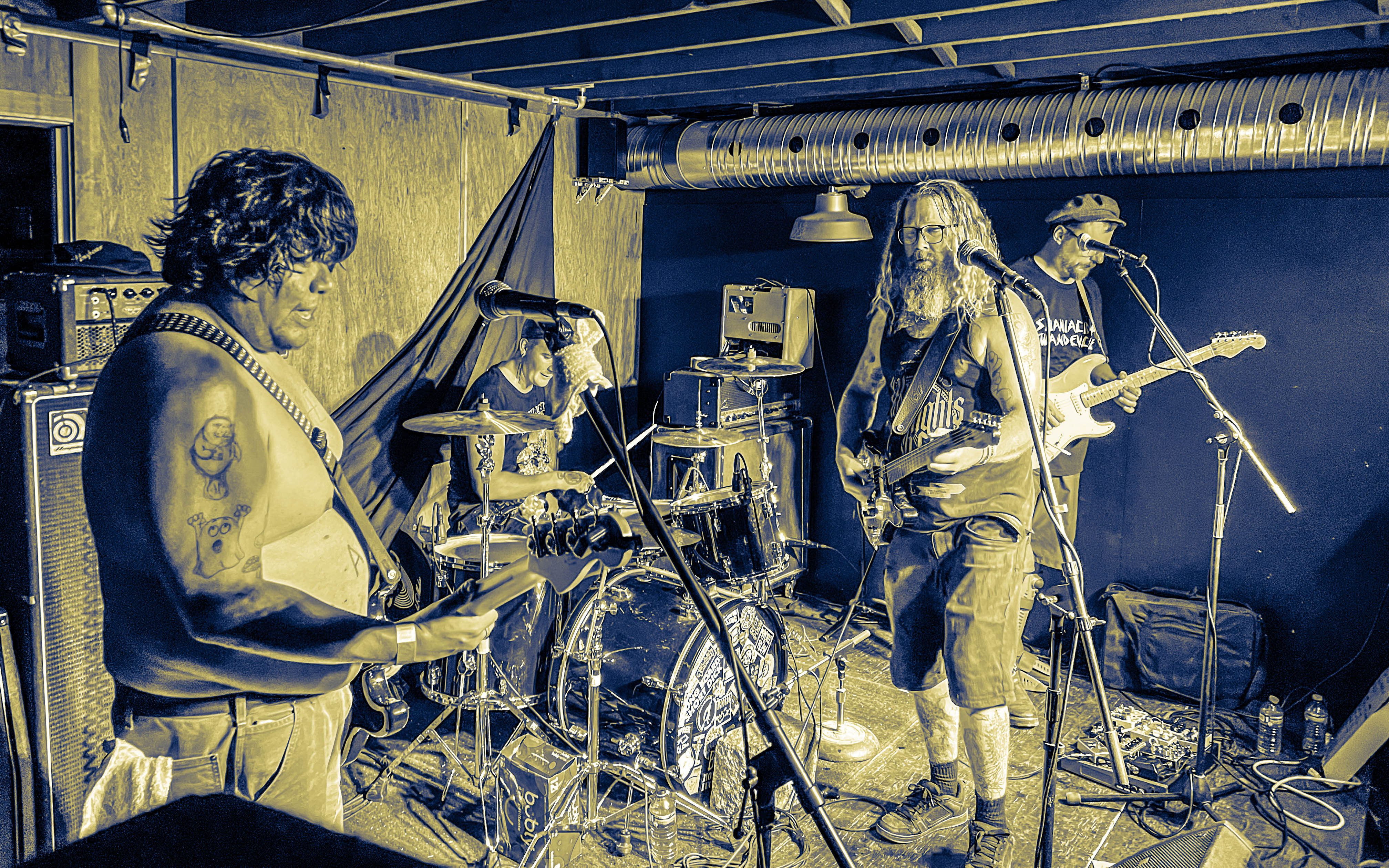
A: That seems to happen, there’s always kind of like a swell and purge of talent in Kelowna—
R: Yeah. And that’s just age. You know, they’re like well, I’m turning thirty I need a career. Can’t be going to Roy’s house all the time. And I remember looking around at shows and there’s all these new faces I didn’t know.
A: So, in this course, we talk about one of the original features of punk and its association with deviance. Punk is deviant in the sense that it rebels against mainstream culture and societal norms. But there is also rebellion within punk itself. How do you relate to that?
R: What, like gatekeepers? Or just anti-authority?
A: I mean, anti-authority could be one, like, you definitely see that all over the place. But I guess I mean, you know, punk gets defined in one way, and then someone’s like, no, that’s not what punk is, and I’ll show you what it is.
R: Yeah. This is OUR punk. Kelowna punk’s different than Vernon punk.
A: And is it? Is Kelowna punk different than Vernon Punk?
R: For a while it used to be. Like, Kelowna punks, we all looked kinda like the Ramones, right? And Vernon punks, they all looked like crusty punks, right? They were all like, screw it, we’re gonna look like Crass, you know? And that’s just based on what they were exposed to first. Of course, we had Copout records here back in the day. And Hunter and Collectors, Greg’s old shop. And he loved the Ramones, still does. So I would ask him like, is this good? He’s like fuck yeah, it’s good.
A: You still talk to Greg?
R: About three times a year. He’s out of the scene, pretty much. I think Whisky Dick just retired, and I think Princess Die just retired. Hot Chauchies play like once or twice a year. But he’s taken the back seat, right? He’s in the back of the shows now.
A: I read a memoir by Michelle Cruz Gonzalez who was the drummer in Spitboy. And she’s a Xicana woman who talks a lot about her ethnic identity and as she embraced it more, she found that she was falling out of the punk scene a little bit, that like the rest of her band didn’t understand her life, her experience, and so she was kind of disenfranchised from punk because it was a white-dominated scene in her experience.
R: Yeah
A: You know, I never delved into punk in a real way. I went to a lot of punk shows as a teenager when I lived in Arizona, but as a Jewish kid, there were a lot of aspects of punk that kinda repelled me from it. Specifically, like The Germs wearing iron crosses, drawing swastikas on their bodies, and stuff like that. So, I kind of related to that experience of like—as I learned more about being a jew, I felt a little bit more distanced from punk, even though I love it. Has that been your experience, too?
R: Not too much. No, no. It’s been pretty open, like I said before. There’s the odd asshole once every few years that will get under my skin.
A: You were saying that punk is actually like, a safe container—
R: Absolutely, yeah, it’s always been like that. I went to Snowjam once in 1998. And there was one guy that just hated everybody, me included. In the Satanic Surfers’ mosh pit, he punched me right in the face. And I backed up and went what’s going on? And just kept dancing again, and then he clocked me again! I’m like, you know, I’m gonna sit this one out. I don’t need that. And I’m a very peaceful man, so I was like, you know I won’t start a fight. I’m not here for that, I’m here to mosh and dance with my friends. But people did see that, they’re like what’s that fuckin guy’s problem? Like, I don’t know. He just hates it. He just hates life.
A: When I went to punk shows in Kelowna, the few times that I did—and not at The Skinning Shack—but other punk shows, I always found the mosh pits to be really violent.
R: It was. It still is. And that’s because those aren’t the punks in there. That’s the bar-stars in there. That happens in a lot of towns. Even at the Slayer shows, right? Biggest moshers in there are the big burly guys who just bought that Slayer shirt.
A: I remember going to shows in Arizona—it was in Tempe—at this venue called The Nile. And we saw Anti-flag, and some pretty big names, we saw Flogging Molly there—
R: Really?
A: Yeah, some really fun shows. And people there just knew how to mosh. Circle pits, lots of fun, you know, someone falls over, they get picked right back up. It didn’t feel violent. It felt aggressive, but not violent.
R: Yeah.
A: I guess maybe it’s a lack of punks that creates a violent pit, like you said.
R: It does, yeah. Like those big guys, it takes them back to their rugby years, or their football years even, and they’re literally like pushing you out of that spot.
I went and saw The Real McKenzies and there were these big dudes who were just hauling ass on everybody. And I looked over and I’m like, “what’s your deal? Like, take it down a notch, you know? Take it down about 50%. You don’t have to beat everyone up. That’s the dumbest thing you can do right now.” But he didn’t listen. Eventually he walked away proud that he beat everyone up. But then as soon as he left, we all went back to dancing. I’m too old to get roughed up.
A: Yeah, me too. The music you’re making now under the name of Mr. Awesome, someone who doesn’t know your history, maybe who has an idea of what punk music sounds like, they wouldn’t necessarily consider it punk.
R: No
A: But I do.
R: Yeah. And I play with punk bands. I open up for punk bands as Mr. Awesome.
A: Do you consider the band punk?
R: It doesn’t sound like punk, but it’s got the punk spirit in it.
A: Yeah, like I feel like if play the songs twice as fast and they’d be punk songs.
R: I actually talked to my buddy Andy a couple years ago; he was my friend out in Saskatoon. After my set, he sat me down and he said, “you know, you put a bass there, a drummer, you’ve got pop-punk songs, and that’s awesome.” Well yeah, that’s how I used to write when I was in punk. Three chords, two minutes, one song. One-two-three-four, go! And that’s how Mr. Awesome has always been: I can make it as easy as possible. Verse, chorus, verse, chorus. Don’t even put a solo into it. 90% of the time there’s no bridge either. I want the song to tell you something, and then I’m gonna leave. Go to the next one.
A: All killer, no filler.
R: Yeah exactly. Especially with the song about Ed Gein, you know; it’s literally all killer no filler.
A: We’ve talked a lot about punk, but your songwriting on this new EP feels almost confessional. It feels really deeply personal.
R: It is.
A: I think that I relate to it, on some level. I can’t assume to know your experience of life, obviously.
R: You’re not supposed to. Unless you really ask me. A lot of my writing comes from depression. Whenever I’m at my lowest point, I write the best songs. There was a spot there in my life where I think I wrote three songs in six years. Maybe seven years. And that was because I was with my ex-wife. You know, I was happy. I didn’t need music; this was perfect. And when she left and I was like, well fuck, now what. And everyone told me to go back to music. So, I just started writing a bit more with my heart. That’s just maturing, right? I’m not going to just write a song about skateboarding with my friends, I’m going to write about the day we went skateboarding and how that felt for me. And when I break up with a girl in Saskatoon, it’s like alright, let me just wallow in my own shit for two days, then I’ll pick up a guitar and see what comes up. And it’s usually just noodling around, if I find something that clicks, I’ll put it down. I’ll pick it up the next day, and if it still clicks, then alright: put that on paper, and then just see what comes.
A: I can totally relate. I write kids songs a lot, right, so that’s a different experience, that’s more like “craftsmanship,” but the songs are personal; they all come from suffering on one level or another.
R: When I try and write when I’m happy, it just sounds like crap. Like my second album, Ghost Songs, I wrote all those songs in eighteen days. They were just all ghost songs. And one was a Daniel Johnston cover, and one was already written. The other nine songs, it’s just okay, let’s write them down, record them that day, mix and master them, and we put it out on CD the next day. It took from like September 29th to October 16th. You know, just boop! That’s it. All out. Let’s put 100 out, just put them out. It was just a challenge to myself. And that was based on me coming home one night and just thinking I saw a ghost in my dad’s house. And I’m like hey dad, I thought I saw a ghost. He says, “yeah, you were fuckin wasted.” I’m like, “okay. Gotcha.” You wanted to hear about my song Her Ghastly Ghoulish Eyes…
A: Yes, I did want to know about that song.
R: I was watching a Youtube about sleep paralysis. With sleep paralysis, there’s people who see an old lady at the edge of their bed. It is like a demon-woman staring at them; you can’t do anything because you’re awake but you’re not. And in my song, I fall in love with this woman, cause I’m a hopeless romantic. I’m glad you’re here. You know, I missed you. She’s just like “what the fuck? I’m trying to scare you to death, you know?” “No, no, don’t go anywhere! It’s my night-terrors that brought me to you.” I wanted to write about the old hag for about five years, and then finally I was noodling around with that little riff, right, and then I started writing about her and then I was like wait a minute, what if I fall in love with this woman? Because every woman I ever meet, I will just fall in love with them for a hot second: I can see myself with you for the rest of my life. And then the lady’s like “cash or debit?” Oh, right, I’m buying groceries, okay. It happens a lot. But that’s what it came to: it’s just sleep paralysis. And the song turned out pretty good in my opinion.
A: I love it. The harmonica is awesome.
R: That was Sky. Because I recorded it, it was gonna be just acoustic and singing, and Max and Sky asked, “can we jump on this? I’ll do percussion, harmonica, Max will do synthesizer.” I’m like, yeah, yeah have fun with it. And that’s what came out.
A: It’s really tasteful. Really good.
R: I appreciate it.

Copyright: Roy Robins
Interview and Transcription: Ari Cipes
Prepared for Publication: Ari Cipes and George C. Grinnell
 Punk Pedagogy