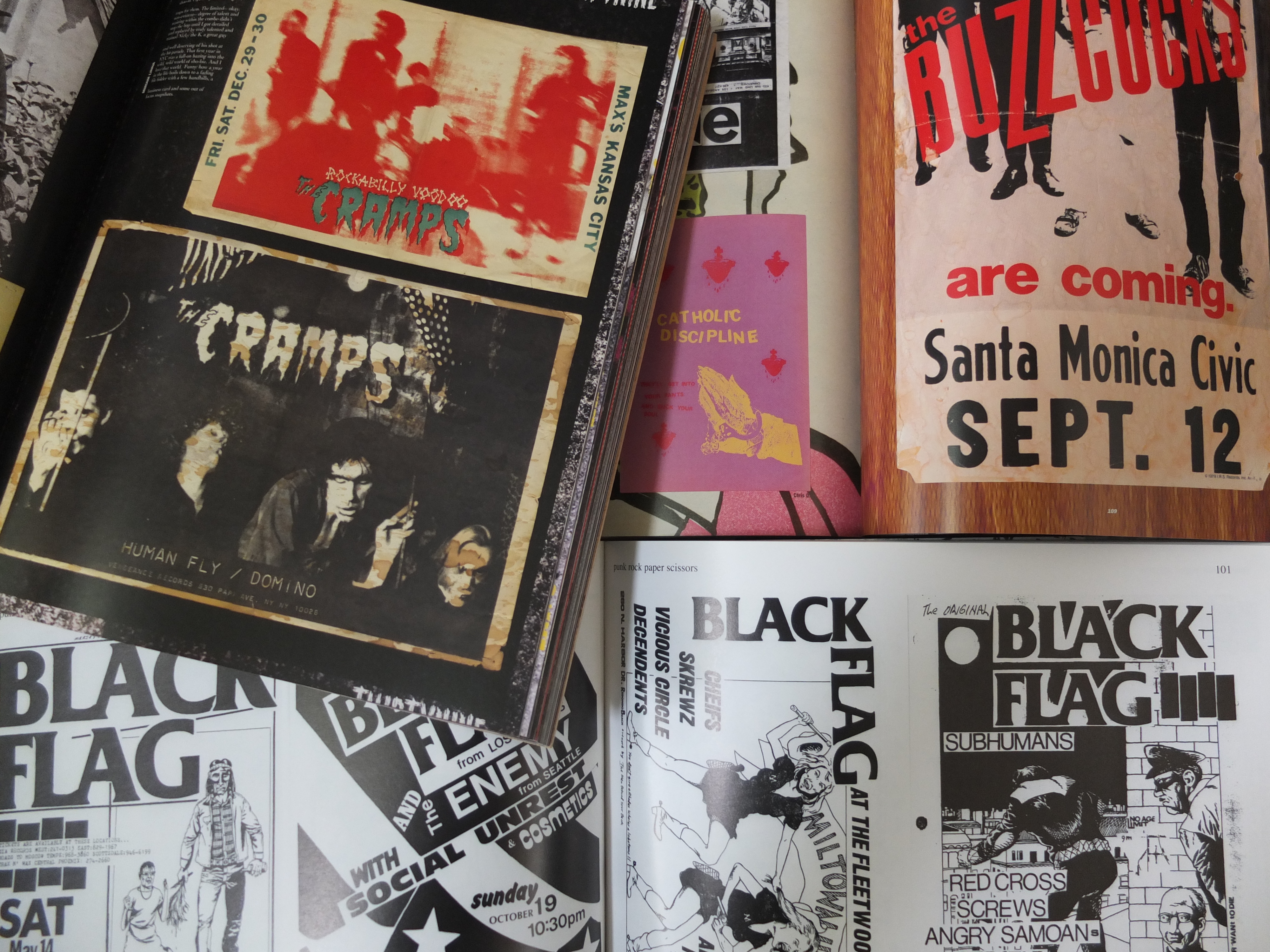
Who is an archive for? Is it designed to disseminate zines publicly and given them a second life or inspire a new generation?
Is it designed to be accessed by credentialed researchers? Is it meant to preserve zines or is the point to see, touch, and read them?
An archive is different from a private collection. An archive is designed to preserve materials and make them available to an interested public. A private collection might pay similar to preserving the materials it has gathered, but it likely does not make these available to the public. So, an archive is always a little bit public. Sometimes it can be very public. Crimethinc recently digitized the entire run of Inside Front: International Journal of Hardcore Punk and Anarchist Action and made it freely available to anyone with access to their website. Some will be less public. The Fales Library Riot Grrrl Collection at New York University is public, but you need to visit the campus and library to access these materials. Lisa Darms notes in the introduction to her collection of ephemera from that archive, that the archive amounts to 1% of the library’s archives and 15% of materials accessed for research, so it is clear that people are accessing these materials. The Zine Collection at the Jacksonville Public Library is probably accessed even more and with fewer controls given that anyone with a library card can come and browse the collection housed as part of the regular collection.
So, punk archives can involve physical locations that are more or less accessible to readers. They can be online, which may make things even more accessible but barriers to access can remain, including access to the internet and data to view image-based documents.
Should an archive be fully accessible? Does this mean that it is also fully online and freely available? What kind of access is appropriate for zines? Should an archive be restricted to certain communities, such as those who have access to a given library, in order to promote hands-on interactions? To illustrate some of these questions, I will examine archives that house zines and punk ephemera and consider how each one manages access.
The Zine Collection at Jacksonville’s Main Library
This particular archive is a part of Jacksonville’s Main Library. It houses a zine collection that can only be accessed in person by patrons of this library system. While the archive is offline and public, it had an online blog that discussed the archive and provided regular updates on the newly accumulated zines in the Jacksonville Public Library as well as information regarding the Jacksonville Literary Scene such as the Jax Literary Festival and seminar-workshops on creating your own zines. There were sections that peek into the archive’s rich collection of zines, such as the “Staff Pick” and “Zine of the Week” which both allowed digitized versions of select zines to be available online for a review or critique. However, the whole website itself was closed down on 15 December 2016, with the founders saying that they are “focusing their energies on other zine related duties” and that they are still working closely with the Jacksonville Public Library. At present, this zine archive is more or less entirely an offline affair. If one wishes to truly engage with the zines then, then they have to go to Jacksonville themselves. There are benefits to this approach. Such an approach may make it easier to house controversial materials without a generating a public debate about whether or not such material should be housed as part of a public library. One can readily imagine that those who seek to ban Harry Potter might not be impressed by public dollars being spent to collect and disseminate punk culture.
This kind of system then asks, if archives are offline, does that limit the engagement with the materials or does it preserve it for further research and documentation? Perhaps an example with a public online archive will help answer this question.
Inside Front: International Journal of Hardcore Punk and Anarchist Action
CrimethInc hosts a digital repository of the zine Inside Front, which was a key platform for Brian Dingledine and numerous other members of the CrimethInc ex-workers collective. One of the most unique features of this archive is that it continues the aesthetic of Inside Front and CrimethInc by romanticizing revolutionary action and inspiring individuals to imagine another world together. This is not just an archive, in other words, but a continuation of the ethic and aesthetics of the zine that it archives.
The original zines were routinely 100-200 pages and the digitized zines are equally substantial, now existing as slow-loading documents that are sometimes well over 500MB. It likely does not help that they have been scanned in color (and hence some look like weathered newsprint) rather than black and white image files. The archive is not as complete as it sounds, hosting issues 10-14. This is likely because earlier issues were still developing the anarchist and politicized punk aesthetic that was fully formed by the time these later issues were created. This is an important feature of an archive that is created by those involved in the original zine: they are not bound by impulses to preserve and document. Instead, they may select what is preserved and made available to readers. Optical Character Recognition which makes the text of the zine machine-readable and thus subject to keyword searches appears to have been applied to the scans.
Not only have they digitized the zine, they have also made available the CD compilations of music that accompanied the zines in their original publication.
Vancouver Punk Rock Collection
The Simon Fraser University Library hosts an archive that is shared online thanks to the Multicultural Canada Digitization Project. It has digitized over 130 collections with more than 1.3 Million materials such as newspapers, photographs, documents, sound recordings, and other objects. These collections are split into eight distinct themes: Activism and Social Movement; Audio and Oral Histories; BC and Canada; Images and Photographs; Immigrant Experience; Indigenous Collections; Literatures and Poetry, and Newspapers. The archive fully discloses that the “posters, artifacts, and ephemera” uploaded in the site are only a small portion of a their holdings.
The “Vancouver Punk Rock Collection” is comprised of over 900 items including zines, posters, LPs/EPs, photographs, and “various pieces of ephemera, and a genealogy of the punk bands” within the Vancouver punk scene. One accesses it by clicking a “Browse the Collection” button. Image files can be downloaded and are of consistent and good quality. Images have not gone through OCR. The collection spans 1978-1984, as far as I can tell. D.O.A. features prominently throughout the collection. There is a great poster of a show where Black Flag opens for locals The Dishrags, one of the first all-female punk bands. Viewing these materials is easy once one accesses the 39 pages of material. It is not always particularly intuitive how to access the archive, however. So, this archive is fully online and public, though it requires a bit of trial and effort, potentially, to actually find things. Searching the archive is somewhat limited. The archive records keywords associated with the images that are searchable. Searching “female,” for example, yields a D.O.A. show poster with the band “Female Hands” listed but it does not find The Dishrags show that I previously mentioned.
This is easily one of the most important archives from a community and scene that has perhaps been among the best archived within the subculture thanks in large part to Dischord Records. The DC Punk Archive is part of the People’s Archive at the DC Public Library. It has been built by donations and the list of donors reads like a who’s who of DC punk culture. The DC Punk Archive makes some material available online and some material is available only by visiting the archive or other locations where the archive is periodically displayed publicly. For example, the archive has hosted shows where local bands play and attendees can learn more about the DC Punk Archive Collections and programs. As the archive itself notes, community participation is a top priority:
“We have sought support and advice from the local music community, and we have invited interested individuals to volunteer as community archivists to help with the processing and digitization of donated materials. We are developing relationships with other area repositories with local music collections to explore avenues of collaboration and resource sharing.
“Programming has been another avenue for engaging the public in this project. Every October we host a month-long series of programs to celebrate the anniversary of the project’s launch in 2014. We have also held a bi-monthly concert series in the MLK Library basement and other locations. Does your local band want to play a Punk Archive Library show? Fill out this form.”
The search functions are generally quite robust and items have been carefully tagged, identifying the contents of individual zines, such that one could find interviews by searching under a band’s name. Items can be viewed but downloaded. OCR has not been undertaken.
Digitized items feature a copyright designation that specifies if the document is in copyright. Because permission to share these documents is not specified, I am assuming that the archive is operating under the following exception that specifies that libraries and archives may
Reproduce, distribute, display, or perform a published work that is in its last 20 years of copyright for the purposes of preservation, research, or scholarship if the work is not available at a fair price or subject to commercial exploitation In most cases, objects are identified as being “in copyright” with a link to the following language, which comes from Rights Statements.
This Item is protected by copyright and/or related rights. You are free to use this Item in any way that is permitted by the copyright and related rights legislation that applies to your use. For other uses you need to obtain permission from the rights-holder(s).
NOTICES
• Unless expressly stated otherwise, the organization that has made this Item available makes no warranties about the Item and cannot guarantee the accuracy of this Rights Statement. You are responsible for your own use.
• You may find additional information about the copyright status of the Item on the website of the organization that has made the Item available.
• You may need to obtain other permissions for your intended use. For example, other rights such as publicity, privacy or moral rights may limit how you may use the material.
https://rightsstatements.org/page/InC/1.0/?language=en
The DC Punk Archive places an emphasis on preservation and sees the creation of digital archives as part of this effort to preserve fragile items that will decay with time:
“Balancing preservation and access is a high priority for this project. Materials are housed and handled according to best archival practices. Security of the materials is a priority, and as with all archival collections in Washingtoniana, require an appointment to access. Digitization of these collections will allow greater access while minimizing handling of original materials. As collections are digitized they will be added to DigDC.”
One of the unique features of this archive is that it archives electronic ephemera. This will be a growing challenge for archivists and historians, whether they are punks or scholars: how should the digital life of punk be collected and archived, if it should be? The DC Punk Archive has begun to answer this question by including digital materials in their archive. They host a copy of the freely available ebook created by Willona Sloan, Come to Our Show: Punk Show Flyers from DC to Down Under. Sloan makes this available but we know that digital documents can be at least as temporary as paper ones, should an author or collector choose to stop hosting material.
Reflections
Digital archives offer relatively easy access to materials and provide a format that will not degrade. They only last as long as material is hosted, however. For individuals interested in Inside Front or DC punk, the digital archives that presently exist are a tremendous gift to our common culture. The Zine Collection at Jacksonville’s Main Library and the DC Punk Archive contain substantial offline archives that are housed in public libraries. They have different priorities regarding preservation. The offline holdings of the DC Punk Archive are treated as they would be by a university library archive that seeks to preserve material, guarding access and required appointments in order to request material. The Jacksonville library wants readers to handle zines freely.
Offline archives do not share their materials with a wider punk culture and might even risk allowing their documents to disappear once again, in essence, if no one knows to look for them, to say nothing of the physical mobility required to visit the archive. It can be argued that this particular method of archiving somehow contradicts punk culture in the sense that it promotes exclusivity and institutionalization. This is clearly a concern that the DC punk archive is keen to address with its outreach activities and its declared interest to work with individuals from the punk community.
In most cases, these archives are digitizing paper products. Sometimes music and digital ephemera is present too.
In only some cases does copyright and permissions appear to be a key concern that was addressed as part of a digital archive.
Most have effective ways of viewing digital archives using a reading view or a PDF-viewer. The quality of the scan likely does impact how readily material is accessed, but imperfect scans are likely keeping with the spirit of the original zine.
By George Grinnell and Rina Garcia Chua
In those days, without the internet, how did people discover and pass on anarchist ideas and tactics?
By embedding these values in rebellious subcultural milieus such as the punk scene—by reading dogeared books about the Yippies, the Situationists, and the Spanish Civil War—and by having adventures.
These three elements—subculture, reading, and adventure—came together in the hardcore journal Inside Front, one of the first projects to bring together people who still collaborate on CrimethInc. projects today.
CrimeThinc
 Punk Pedagogy