By George C. Grinnell
Published in Punk & Post-Punk, Vol. 12, Issue 1
PDF included at the bottom of the page
On Punk Friendship and the Limits of Community
I will never forget any of this. Friends forever.
Reversal of Man
Punk has always needed enemies. In 1982, LA punks had local police and Ronald Reagan to rail against (MacLeod 2010, Ensminger 2016, Muñoz 2018). In 1993, punk defined itself in opposition to grunge and the resurgence of commercial interest in punk sounds (Thompson 2004, O’Connor 2008). By 2010, a proliferating memory industry in punk made an enemy of forgetting. And by 2017, the president of the United States had once again become a target for punk rock. Punk has long created community out of the sometimes rich and sometimes reactionary emotional and psychic life that can be nourished by opposition. As Dewar McLeod notes of 1970s punk and its transition to hardcore in California, punks “were part of something larger than themselves, yet still separate from the mass. Punk scenes were communities, even if they were often fragmented and fragile. Through zines, bands, and touring, and sleeping on other punks’ floors, punks created a dispersed, yet interconnected mass subculture” (2010: 136). This assessment of community offers a twist on Dick Hebdige’s foundational scholarly emphasis on the stylized incoherence of 1970s punk culture that rejected mainstream British culture with shocking visuals and “ironic self-abasement” (1979: 112). The shift to emphasize community elevates and redeems Hebdige’s analysis of antagonism by recognizing in punk an opposition to the mainstream that is no longer failed resistance but instead the transformation of outcasts into a “community and collectivity” (Dines 2016: 16). Community has remained a vital feature of ongoing punk cultures in a way that irony and style have not. For example, in 2002, the punk collective that started the Multi-Tool in Williamsburg, Pennsylvania, combined a concert space with a bookstore and a bike repair shop and worked toward a functional alternative to ordinary capitalist social relations “by creating an economy almost completely devoid of currency”: “If you needed new handlebars and the shop had a pair of handlebars lying around, you didn’t buy them – you donated whatever skill you had to the project, and … you got the handlebars you needed” (Mulkerin 2011: 15). For punks, an “anti-establishment ethos” (Kallio 2018: 160) consistently led to experimental forms of community that appear to “find refuge in its exclusion” from a wider world and its own ambitions to “escape” conventional social and economic relations (168) by establishing separate punk clubs, zines, music labels and distribution networks. Such features of punk culture were, in effect, “institutions in opposition to the dominant values of consumerism” created by punks “attempting to create their own semiautonomous public sphere” (McLeod 2010: 100).
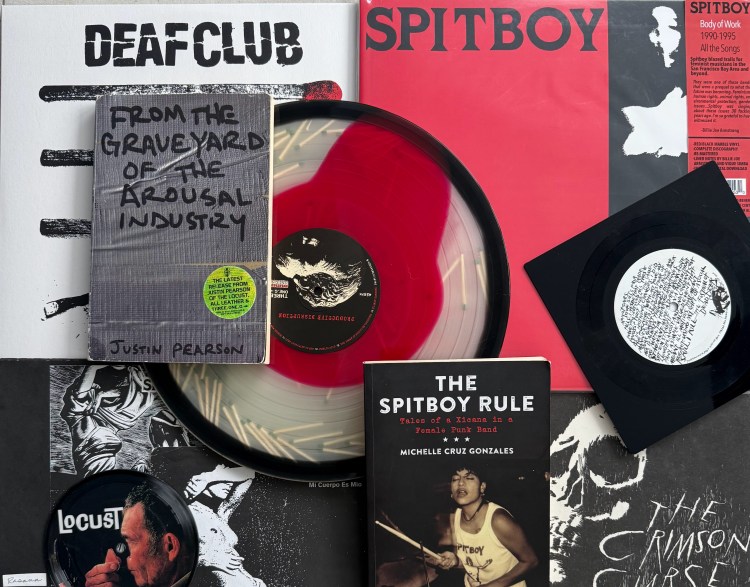
Such a narrative is a compelling sign of the capacity of underground punk and hardcore cultures post-1976 to create community in response to exploitative and dehumanizing social and economic realities. It is likewise a narrative that understands the value of romanticizing dissent and practical small-scale responses to the almost limitless injustice in the world. There are good reasons to acknowledge and document this narrative of community rooted in the ways “music and its culture can lead to social bonds” (Murphy 2016: 199) because it reveals how punk subcultures express the passions of those involved, inspire others with achievable models of social and economic life, and create culture in ways that exceed the brief catharsis of screaming along to music that makes an enemy out of the normal world. The problem with this narrative is not that it is false, but that it forgets things. It forgets the difficulty of separating punk culture from the larger world it inhabits. It forgets how divided punk scenes can be and the extent to which social relations among punks are conditioned by the residual presence of social norms that have not been left behind and which can defeat the promises of a punk community. It forgets the difficulty of living with such dissonance as well as the remarkable power of intimacy and punk culture’s steady reflections on the sometimes vexing and sometimes invigorating effects of building a life together. Such are the experiences documented by Michelle Cruz Gonzales in her memoir The Spitboy Rule: Tales of a Xicana in a Female Punk Band (2016) and Justin Pearson in From the Graveyard of the Arousal Industry (2010). Gonzales and Pearson write as musicians profoundly attached to punk culture and whose numerous bands would become cultural touchstones within the subculture in California and globally in the 1990s. Yet for each of them, and in different ways, the punk community is a highly-regulated space that polices how they are meant to live. They document the emotional, intellectual, and physical toll of such experiences and tell another story in response. Taken together, these memoirs explore the importance of friendship as a sustaining feature of punk social life and assesses the value and function of community in punk by asking: what is involved in recognizing friendship as something that structures punk around altogether different operations than a notion of community presently does? More perplexingly, their memoirs ask how and why does a concept of punk friendship point toward the impossibility of a special form of friendship that is distinctly punk?
The category of friendship can appear hopelessly romantic and naïve and scholarship attached to it risks being dismissed as uncritical. Gonzales and Pearson see in friendship a resource that enables them to reflect on the complex relations of affinity and power that subtend living together in the punk community. I see their emphasis on friendship doing at least two things of note for those interested in the complex ways in which social life structures intimate and political realities. First, punk friendship shifts a debate within studies of punk away from an untenable emphasis on separation where punk is recognized as a community opposed—in practice or ideals—to a larger and alienating world of normative social relations. Second, because Gonzales and Pearson treat friendship as an alternative to the thought of community and its established conventions, friendship is a means of depicting forms of being together that are vital but also unassured, fragile, contingent, and developing. To be honest, I am not convinced that friendship occupies an unrationalized space of affiliation and intimacy that escapes the capacity of norms to police how people exist together given the substantial psychic and social territory these norms have acquired in our lives, but I do see in these memoirs a thought and practice of friendship that mediates exactly these concerns. Both Gonzales and Pearson record the tensions between intimate social relations and a larger world of norms and social practices by charting the painful effects of marginalization within the punk community. Their narratives make it impossible to continue to tell a story that pretends the punk community is distinct from the harmful norms that regulate and even punish people for who they are. And if the concept of friendship is not perfect for such reflections, that does not diminish what these writers are able to explore with it.
Is this an argument that can only end up in disagreements over the essence of punk? These memoirs are not particularly focused on definitions and gatekeeping perhaps because they address punk in the 1990s, a period that was by now familiar with the many variations of punk that unfolded in the wake of the absence, a generation earlier, of a “consensus over its scope or aims or defining actions” (Reynolds 2017: 263). Writing in 1986, Simon Reynolds saw that punk in the 1970s was an unusually deconstructive category that tended to put its own essence in question such that punk was best understood less as a set of beliefs or a fashion or a sound than “the opening of a discourse whose subject was: WHAT’S PUNK? (i.e. what’s music for, what power can art have?)” (263). These memoirs return to a later period in which the question of punk’s potential to distinguish itself from the forces of the market economy had become a defining feature more salient than its sounds, habits, or style. Punk is the word lit up on the sign leading to a multi-faceted underground world and as such neither memoir claims to tell the story of punk. Instead, they are quickened by their different realizations that telling the story of a life in punk is a process of giving an account of oneself, one’s particular experience of punk and its local contexts, the centrality of shared creative experiences, and the jarring discovery that a community of outcasts can come to be conditioned by the same social norms that they sought to escape. The result is a narrative about punk and its norms, but this is more a consequence of their personal accounts than the stated object of each memoir.
Punk was not always a category with philosophical and historical significance for Pearson or Gonzales. It was first a means of getting away from something, and only later became something in itself. Gonzales writes of growing up among hippies in the California foothills of Tuolumne County near Oakland, raised by “a strong woman whose influences on me, negative and positive, were profound” (2016: 3). She refers to herself as Xicana, a term that expands definitions of nationality and ethnicity to include indigeneity and an acknowledgement of imperialism and colonial relations of power: as “a Mexican American, a Xicana in a hick town, I was never allowed to forget that I didn’t fit in, that I muddied their waters” (3). In punk, these two circumstances converged and became an identity: “Tuolumne saw a shabby Mexican girl, a freak, so I was going to give them one. But I looked good too. I saw that the look suited me, enhanced who I really was, who my mom hoped nobody saw she might be, a Xicana from East LA, the person she covered up with the long jean skirts and macramé tops” (4). Playing in all-female bands, first Bitch Fight then the influential Spitboy and later Instant Girl, was a means of continuing to be a strong Xicana woman while also establishing some distance between herself and her home as she moved into the San Francisco Bay Area’s punk culture.
Pearson too finds a home in punk, even if the “nasty punk ethics that would essentially raise me” (ix) only intermittently repudiated the violence, substance abuse, infidelity, and emotional manipulation he experienced growing up. “Most of my childhood,” he writes, “I was the undesirable kid. I was a fuck-up, like the rest of my family, who lacked values across the board” (4). As a punk, Pearson combined ethics with creativity, inspired by the passion of bands such as Downcast, whose performance at 924 Gilman in Oakland was revelatory: “I had never seen so much intensity in any art form” (2010: 40). In punk, he discovered a world in which bands prioritized social justice and addressed the audience “as peers, not as rock stars” (40). Like Gonzales, Pearson transforms himself thanks to the influence of punk: “I was a sponge absorbing ideals about women’s rights, animal rights, gender issues, class struggle, etc. From that point on, I realized that politics were important to me and I was finally able to be opinionated and heard through my own music” (41). Punk arrives as a rewarding opportunity to grow and understand what mattered to him and, as an important support in his life, it existed in contrast to instability and abuse at home.
Easy distinctions between a punk world where they felt like they ‘fit in’ and the wider world where they didn’t tend to collapse over the course of the narrative, however. These narratives highlight the community that punk brings, while also insisting that this world involves many of the same realities the authors have tried to escape. Pearson narrates the breakdown of his marriage that was characterized by the unhappy return of childhood antagonisms: “I had basically relapsed to my childhood and how I had been with my parents, dealing with unhealthy and destructive elements I didn’t really know I was signing up for” (180). Becoming a punk did not mean the traumas of childhood disappeared. But it did mean that his punk family would support him by moving his ex-wife’s belongings out of their home and protecting him when he was threatened with physical violence (183).
A punk family can take interesting forms, like so many families, and being in a band with friends is “sort of like dating them (without the sex)” Pearson suggests (87). Gonzales goes further and contends that “if being in a band is like a marriage (and trust me, it is), then playing live is the sex, which makes playing live easy. It’s the payoff” (2016: 55). The experience of punk is rooted in close-knit bonds of affection and respect for them both. As Gonzales notes, “we genuinely liked one another and admired one another” (55) and this led to the creation of what became known as The Spitboy Rule: no boyfriends on tour. They wanted to prove, as women, they could tour successfully and “it was this sort of admiration of one another and all that each of us was capable of that caused us to make the no-boyfriends-on-tour rule in the first place. I know I never wanted divided loyalties to interfere with or change any of it” (56). More than just a Do It Yourself ethic, this rule also put into concrete terms a desire within Spitboy to “remain united” and not to feel “alone or divided” among all the challenges that can come with touring nationally and internationally (56). On tour, family meant looking after one another and focusing on bandmates first. This feminist do-it-ourselves ethic is a marked departure from the neo-liberal tendencies that can characterize some versions of DIY that prioritize “the individual self” and “the innate or fundamental freedom of the individual and the commensurate need for individual responsibility” (Achtermann 2021: 24-25).
Punk families were not just the product of playing music and touring together. Gonzales discusses the “punk house I lived in with Adrienne that was called the Maxi Pad because it was rented by women” (116) and Pearson vividly recalls the “Golden Hill House” (2010: 52) where he lived with bandmates. Because these houses establish a center for social life within their punk communities, they are manifestations of the worlds that punks create together. They are part of a much larger history of brick-and-mortar punk culture in North America that includes spaces like the Dischord house in DC, the church that Black Flag occupied, record stores like Who’s Emma in Toronto or Epicenter in San Francisco, as well as DIY concert venues such as 924 Gilman in Berkeley. But while punk spaces might be distinct and sheltering, they could never block out the wider world the authors left. Just as Pearson found himself following well-worn paths of destructive behavior established by his parents’ marriage, Gonzales is haunted by the possibility that achieving some distance from her home life and its challenges only intensifies the guilt she feels for “leaving my brother and sister with my drug-addicted mother, the shame of growing up shabby and on welfare, the anger about being treated like a minority, othered” (2016: 16). Not only does she find that a punk family can be a refuge, it can also not be enough of one—and perhaps nowhere is—to ease the pain associated with the world she has left.
Much of Gonzales’ memoir explores the complicated hope and disappointment she felt in response to punk’s capacity to establish a community that opposed the norms of the wider culture surrounding her in 1990s California. She remembers the complicated desires and power imbalances that she and her fellow “Spitwomen” (23) encountered when performing for the first time:
We played mostly for our friends that day, so it was an offering of sorts, a way to help them see us in this new way. Members of Filth, Neurosis, and Econochrist were in the audience. I could feel every person in the warehouse with its cement floors, high ceilings, and skylights focused on our femaleness, focused on the fact that we were women about to play what everyone thought of as male music. Sitting behind my drum set before the first song, looking out onto the crowd, I realized that the show was a test of sorts too, a can they pull this off? I had been excited to share Spitboy with our community for the first time, now I wasn’t sure looking out onto what had become a blur of hard unfamiliar faces. We got nods of approval when our set was over, but the men in the scene somehow made it clear that we would not get the same respect that they gave each other. (Gonzales 23)
Earnestly wishing to share the music they created, Gonzales sees the opportunity to transform social bonds into something more and is met with the frustrating realization that she cannot control how others respond to her and her band. Marc Bayard writes that punk is “a community and a real avenue for sharing ideas and making changes both personal and in the world” (1999: 12). Similarly, Lauraine LeBlanc describes how female punks often saw the subculture as “a chosen family” that was “more nurturing than those they had left” (2008: 92). Gonzales’ account of the reception of this first gig—“We got nods of approval when our set was over, but the men in the scene somehow made it clear that we would not get the same respect that they gave each other”—captures the truth of these claims about community while also establishing their limits. Community could support but it could also discipline. It could issue degrading assumptions designed to teach her to see herself as a woman who is less capable than her male peers. The punk community could insist that being a woman meant being less than a man, and it could do so without even trying because the wider world of male supremacy, and all of the years it spent squatting in the brains of children, was ready to ensure that many punks would fail to appreciate the music Spitboy created.
Pearson confronts a different set of social norms within punk, but the recognition is similar: punk is not a community willing to recognize the existence of all of its participants equally and it could be just as aggressively normalizing as the world that so many punk songs repudiated. That punk might not be progressive and might enjoy being offensive is, of course, a key feature of the history of punk. Hebdige first documented the crassness of punk when he quoted someone who justified wearing a swastika by noting “‘punks just like to be hated’” (1979: 117). Pearson rejected such “dumb” expressions of offensiveness (117) by noting that his background had exposed him to more than enough senseless hatred: “with an alcoholic wife-beater father who didn’t give a shit about his son, I was bound to avoid the cliched, nihilist aspects of punk culture” (Pearson 2010: 12). Given his political commitments and participation in a self-educational punk curriculum that included “reading about social revolution, political organizations, artists, and just about anything else that seemed progressive to me” (47), it was all the more galling when he encountered the mainstream “bastardization of punk culture” in the 1990s that brought many “of the people in high school who gave me trouble” to the “shows that my bands played” (48). Pearson finds himself attacked with homophobic epithets by audiences whose attachments to sexual discrimination complexly recall and disavow, recall in their disavowal, the queer roots of the term “punk” as African-American slang for sodomy. As Tavia Nyong’o notes, this etymology “marks a discursive space in which the possibility of desiring sodomy, desiring to be sodomized, is unthinkable but, nevertheless, unavoidable” (2005: 22). Pearson laments the “closeted homoeroticism of hardcore” (2010: 118) and documents playful elaborations of Nyong’o’s thesis, including stage-diving “time and time again with next to no clothing on [which] bummed out many of the hetero, jock-type hardcore dudes” (105). Much like the gendered discrimination Gonzales encountered in punk, the homophobia of punk culture stings especially because it replicates and recalls the violence that Pearson faced outside of punk culture, including physical and emotional abuse at home. As true as it is that “punk has never been a monolithic, consensus-minded community” (Ensminger 2106: 165), it is equally true that there have often been limits to the kinds of difference and diversity that a punk community is willing to acknowledge and support.
As much as she might have wanted punk to be a nourishing community, Gonzales learned quickly that being in an all-girl hardcore band meant she would never quite pass as punk according to subcultural norms that identified punks as male first, if they recognized the substantial contributions of women at all. This was a blinding insight, however, that left another set of circumstances unaddressed, Gonzales recalls. She felt it “gnawing at me, reminding me that being in an all-female hardcore punk band wasn’t the only way to define myself” and that being seen as a woman in hardcore was a recognition that left out an important part of her life (2016: 5). As “a Xicana, in a mostly white band in a mostly white punk scene” (13), Gonzales finds herself recognized only as a punk or a woman. The misogyny of hardcore highlighted her gender and negated her race, culture, and history. Disappointingly, she discovered that this could also be an effect generated by feminist interventions in punk. Charges of cultural appropriation were levelled against Spitboy by “a riot grrrl from Olympia” who “objected to our use of Spanish for the title of our record and accused us of stealing from someone else’s culture, in particular the [title of the ep] ‘mi cuerpo es mío,’ which translates to ‘my body is mine’” (86-87). Gonzales realized “apparently my body was invisible” even to women within punk culture (87). For Gonzales, correcting this oversight does little to help her overcome the invisibility she experiences because it generates yet another invisibility: she becomes a learning experience for someone who fails to see her race. Such invisibility underscores the importance of what Mimi Thi Nguyen, a scholar and a longtime contributor to the same Bay Area scene that spawned Spitboy, identifies as the educational “course corrections” that further burden and segregate women of color by making them responsible for correcting misperceptions engendered by uncontested white privilege (2012: 190). The Spitboy Rule occupies an important place in the histories of punk because it remembers the contributions of a Xicana author and artist to punk culture, especially when many continue to privilege white perspectives that ignore the contributions of women of color. Such a perspective that recognizes the contributions of women of colour in punk answers Jack Halberstam’s call for a new “feminist genealogy of punk sound” that challenges the story of “heroic art-school dropouts” in which “white guys play all the parts—the masters and the slaves, the businessmen and the slackers, the insiders and the outsiders” (Halberstam 2013: 129).
In another context, Judith Butler identifies how personal narratives involve telling a story about more than just oneself. Every personal narrative is an account of larger social realities because one is “shaped by the unchosen conditions of one’s life” (2005: 19) and that a life becomes recognizable, in part, according social conventions one does not choose and which one cannot fully evade, such as those of sex, gender, and race. To tell one’s story means narrating the encounter with these social realities and the questions they raise for individual existence and social legibility. For Gonzales and Pearson, this takes the form, most notably, of a discovery that punk is structured by many of the same social norms associated with the dominant society that punk pretends to have rejected and thus these memoirs test the redemptive story of a punk community and develop new narratives that acknowledge how it remains attached to damaging social conventions while also nourishing alternatives to those norms.
They are not alone in this discovery. As Angela McRobbie notes, what Hebdige called punk style is really male punk style and all of the complicated ways that it navigates masculinity and compulsory heterosexuality and “because [Hebdige’s] model is not gendered, he fails to recognize that these are gender-specific processes” (1990: 62). Punk might be a separate world in some ways, but in others it remained closely attached to the priorities and conventions of the world it rejected. As Gelder notes, some of the earliest academic assessments of subcultures “overstated the discreteness and distinctiveness of their subcultures” (Gelder 2007: 106). Subsequent work on subcultures has sometimes over-corrected by noting the impossibility of separating the subculture from the larger culture, resulting in a criticism that sometimes “refuses to see sociality – sites of shared experiences, expressions of social distinction – anywhere” (106). This over-correction has not tended to be the dominant feature of punk criticism. José Esteban Muñoz writes powerfully of punk as an anti-capitalist space of experimentation and community, for example, and describes “the early Los Angeles punk scene as a punk rock commons that was marked by surging queer and racialized singularities and energies” (2013: 96). The concept of a commons comes from England and the practice of treating particular territory as a “legally recognized communal resource, often a piece of land, with non-exclusive access rights, used by commoners to graze livestock, or to go for pleasurable walks” (Butt 2016: 64). Punk scholarship has adapted this idea of the commons to consider how punk culture draws upon similar practices of sharing resources (Butt 63) and creating open communities meant to serve all those “hailed by a mode of negation associated with the outsider’s trajectory, the space to find an otherwise elusive mode of being-with” (Muñoz 2013: 97). There is much to appreciate about the notion of a punk commons, especially in its outline of a past that can model “a way of living, a mode of existing even, through which an alternative future could be glimpsed” (Butt 2016: 58). Arguably the promise of such “a future in which more might be had by the many rather than by the few” is at the core of much of punk’s practical utopian mindset (Butt and Millner-Larsen 2018: 402). But there are also reasons to be concerned about what such a hopeful and pluralistic representation of punk can remember for that future, concerns that Gonzales and Pearson elaborate with such care. Their approach insists that punk is not just a force of opposition. Consider Muñoz’s careful, but ultimately limited, assessment of the relationship of punk to all that is not punk as an example of the sort of assumption their memoirs rethink:
The world is made up of various senses of the world and their attunement toward seeing and feeling in common, to touching the limits of one another’s being, much like the punk who staggers forth in a mosh pit, hurling herself against another body, not to do harm, but instead to touch in a way not predicated on mastery and control, signaling a salient desire for an encounter, an engaged participation, an invigorating melee. This punk rock commons is predicated on the acknowledgment that brains have been battered and that the order we live and struggle within is indeed a ‘rancid mill.’ Capitalism is itself the rancid mill, insofar as it organizes life around production in such a way that abstract labor impedes the potentiality for being-with. (2013: 106)
Muñoz is certainly right to note that punk lays bare many of the rancid structural antagonisms and widespread inequality of everyday life under capitalism, features that many are taught to forget or ignore through so many pervasive ideological mechanisms. More, punk rightly represents a substantial and practical articulation of hope that takes the form of a collective rejection of dehumanizing social relations as well practical efforts to realize alternatives. Punk is promising and I know I remain firmly attached to that promise and persistently inspired by what it can accomplish. But that promise becomes cruel when it is defined by an exceptional and fantasized opposition between the punk community and the wider world. As Pearson and Gonzales found, the opposition Muñoz stresses when he opposes punk culture to alienated choreographies of capitalist existence can provide cover for the growth and spread of damaging expressions of white privilege, misogyny, and homophobia within the punk community. Punk contests social violence but it can also be organized by it every bit as much as the normal world is, and the only shocking part of this truth is how routine it was for Pearson and Gonzales. By the 1990s, the inchoate desire that Muñoz ascribes to punk in the 1970s and 80s has been sharpened by the unanticipated disappointments that emerged from the invigorating melee of contradictory energies in the punk community that was not always seeking to make all lives more livable. The “belligerent insistence on something else” (2013: 109) could always produce unpromising results and this dynamic recalls Eric Stanley’s more tentative recognition, gathered with attention to queer cultures, that a commons is best conceived as “a limit and a door leading to both the irreducible friction of togetherness, the constriction of the ‘we,’ and its transformative potentiality to open to another world” (2018: 492). Relations of power will always condition the nature and limits of what is deemed to be held in common and this means that a commons “charts the structuring parameters of the social,” while also “inciting us to dream against the hard pragmatism of the present” (502). These are not easy tensions to navigate, and Gonzales and Pearson demonstrate how they might be charted.
Some might contend that I have not been sufficiently attentive to history here and that punk in the 1970s was closer to a community than it was in the 1990s, just as expressions of digital community in punk in the 2020s marks another distinct expression of community with its own unique protocols. While I suspect that the historian might actually have an even stronger critique of punk as a community in the 1970s than what I implied in passing, my response is slightly different. I appreciate Stanley’s sense of the temporality implied by a concept like the commons that returns to an idealized past not with naivety but with the sense that it can incite new undetermined futures. I simply don’t see the pastness of the past to be the point here, though I can see that one might wish to assemble the shifting notions of community in punk over time. Muñoz is no historian. He is looking at 1970s punk to see what it can offer us now. Gonzales and Pearson return to punk with perspective and insight, but their narratives are written for present readers. They are personal accounts that brim with the passion and energy of punk rock, seeking to share and inspire others to pursue what matters to them, no matter how unconventional. These are not works that declare the death of punk or even the end of its significance for the authors. Gonzales and Pearson continue to be attached to punk despite knowing how it replicated damaging social norms and how thoroughly penetrated by structures of domination it was. Writing into the present moment, the memoirs beg the question, why stay? Why remain committed to it now as authors spending all this time and energy writing about punk and its failures?
There is clearly something worth keeping alive here. And as Gonzales and Pearson suggest, one can nourish the ambitions of punk while also challenging its deficiencies. They believe in a legacy for punk of the sort that critics interested in other cultural resources held in common have noted are “always in the process of becoming, orienting itself toward future” (Butt and Millner-Larsen 2018: 410). Communities and commons, like any form of social existence, are complex and variable. A turn to the uncertain promise of the future need not avoid the complexity of the present or the past. A messianic potential or the simple joy of Muñoz’s dancing punk should not entail a blindness to what has sometimes arrived in the place cleared by promise. Like Muñoz and his faith in punk’s “belligerent insistence on something else” (2013: 109), I continue to believe in the juvenile immediacy of punk because there is value in being wary of a promise of what is to come, especially when there is so much to do here and now. Punk has always granted permission to get things wrong, make mistakes, and sometimes even be accountable for them; it values the fierce urgency of doing something and DIY is nothing less than a performative theory of how one survives the failure of ever fully realizing one’s guiding ideals.
If it is true that the commons is “a resource with nonexclusive rights of access or use” (402), one can meaningfully speak of punk as a commons seized and used by different individuals for both shared and distinct ends. That diversity of purpose and ambition is worth keeping intact too. But as Gonzales and Pearson know well, the thought of community ought to acknowledge widespread social contests over what this resource called punk is, especially when it is used to regulate the lives of some and not others precisely by not acknowledging the diversity it contains. How one understands what is shared and how it is shared in any commons depends on a range of decisions and varying degrees of authority regarding land, place, publics, collective existence, and politics. The application of force, including the force of normalization, fundamentally transforms that.
The question is not, why stay? The question is why are Pearson and Gonzales and so many others still friends to punk? Why do so many remain “soaking it all up (or maybe mopping it up) in a graveyard of everything dead, done, and old” (Pearson 2010: 186)? What does it mean to frame punk in terms of friendship rather than community? Friendship is a weak theory of punk that attempts to hold in tension, without resolution, all the failures and accomplishments of punk and all that it means to those involved. Strangely, there may not even be some specific thing called “punk friendship.” This is one of the lessons shared by the memoirs: it may never be possible to separate punk from a wider world. There might not be a special friendship possible only here or a type of friendship that is itself punk. The preference these writers have for thinking in terms of a small-scale economy of friendship and its limited ambitions records and remembers the failures of punk to separate itself from a world in which social norms violently police how individuals exist. That is the point. Friendship cannot separate itself and pretend it has all the answers. It does not overturn the violence of community; nor does it try to replace it. For these authors, it possesses a deconstructive force in the sense that it appreciates how punk can differ from itself and recognizes that as a sustaining and nourishing feature of punk.
Whether it was joining friends to act out an absurdly inventive and complex love triangle on the early “reality” talk show known for spectacles of abuse, The Jerry Springer Show, or starting another band with people who mattered to him, Pearson’s memoir documents the intimacy of a life lived with others whom he loves. The memoir is not structured by a narrative of personal ambition or individual redemption. It avoids conventional biographical arcs that are premised on the author’s autonomy and prefers instead to explore how the author is shaped by others throughout his life. For a book with 48 short chapters, it is remarkable that the final chapter is the only one that does not stage explicit social interactions and creative endeavors with others. From the Graveyard of the Arousal Industry is an intensely social account of creating a life with friends who are the steady collaborators necessary for making music and creating culture together. The effect is a consistently personal account of punk that is also a story of the collective force that makes punk or any other expression of culture possible. Pearson emphasizes “the unspoken connection that people can have when playing music. This transcended all forms of conventional communication, and we found emotion in what we created together” (91). The significance of such experiences, especially for someone growing up amidst physical and emotional abuse, cannot be underestimated. The shared intimacy of punk can be among its most profound effects for anyone involved: individuals learning to live and create in a world with others upon whom they depend, whether that is playing in a band, writing a zine, putting on shows in a basement, participating in social activism, building solidarity and community, gaining faith in the world, and losing it. Some of his comments regarding his band The Locust are perhaps the most telling in this context, especially because this was a band that would consistently confront punk’s failure to be the radical and progressive space for misfits that it often claimed to be. The Locust was known for their gender-bending outfits of hot pants and mesh vests and had
a firm stance as a gay-friendly band and we didn’t care what anyone thought about us anyway. We were just sick of hearing people complain about us, and again, we were just subconsciously pushing buttons and testing boundaries. Anyhow, hardcore as we knew it was dead, and we could’ve cared less. (118)
Frequent targets of homophobia within punk culture, Pearson and his male bandmates bond over their refusal to follow the masculinist heterosexist norms of hardcore. As with The Locust, his performances in The Crimson Curse stand out for their vitality and vibrancy:
Here, alongside the followers of Unbroken with their pseudo-greaser look and typical hardcore camouflage cargo-shorts and black t-shirts, you had The Crimson Curse in cowboy hats, glitter half-shirts, goggles, tight pants, high-heel boots, and makeup. To many, we were complete “fags” and we bummed out about fourteen hundred of the people there. The sleaze and the fact that we just didn’t give a shit about what was acceptable were perfect. (104)
An outcast among outcasts, Pearson refuses to sacrifice punk to the normalizing heterosexist tendencies of some. He finds himself at the gendered limits of a punk community that, it turns out, contested some “entrenched values” much more than others (Haenfler 2006: 199). As Ross Haenfler notes, punks created “communities of meaning that support individual efforts at living according” to an ethos of radical politics, including straightedge values and animal rights, but this was often premised on homophobic anxieties regarding sexuality and gender (199). Yet the collective pronouns that guide Pearson’s writing at these moments make it clear that he remains attached to the power of a small group of friends to create “something relevant to the world we lived in” (2010: 40) despite the normalizing impulses of a broader punk community.
Gonzales uncovers a similar dynamic in which intimate friendship becomes something that makes punk worthwhile, capturing as it does the capacity of punk to be different from itself and not simply a repetition of some of the most damaging normative expressions of the wider society. Gonzales did not grow up speaking Spanish, but developed fluency during these years as part of a “lifelong dream” that addressed “rumblings of discontent” with her identity “that I didn’t quite understand” (2016: 89). These experiences led her to suggest a Spanish title for a Spitboy record, initiating a thoughtful intersection of social and personal histories in their music:
the main reason that I suggested ‘mi cuerpo es mío’ as the title of the seven inch was to acknowledge an aspect of my membership in the band that I felt was missing, an aspect of myself that I felt unable to or insecure about expressing. Blame the scene, blame Tuolumne, blame America. It could have been any number of those things. Probably all of them together were to blame for my locura, for my schizophrenic or closeted identity. (90)
Gonzales connects her use of Spanish to a reality that is more than punk and its expressions of community. Her bandmates supported her decision “and liked the phrase ‘mi cuerpo es mío’ because of its strength in sound and content” (89) even if they may not have been able to appreciate all of the ways in which she was bringing art, culture, and language together to articulate a feminist Xicana politics. As Gonzales notes, this was an aesthetic decision about language—the “masculine ending noun ‘cuerpo’ and pronoun ‘mío’ is what creates the strength in the line and is an aspect of the Spanish language that makes it particularly euphonious and easy to create rhyme” (89-90)—as well as a decision to make visible to others “the face and body through which I experienced the world” (90). Not only does the album title recognize the nature of her life and invite others to do the same, it is also a way of demonstrating that if there is such a thing as a punk community, it is never separate from a larger social and cultural realities and their power to define what it means to live as a Xicana in a white supremacist US culture. The East Bay punk scene sometimes felt like a community but it also left Gonzales certain that “people in the scene did not see me, who I was at the core, the face and body through which I experienced the world” (90). As Nguyen puts it, when the punk community discussed racism in the 1990s, its loudest proclamations understood it “as something that the state or neo-Nazis committed, rather than something that was also with us” (2016: xvi) and that the scene’s “colorblindness” (xvii) failed to see important differences and inequalities that threatened to erase how Gonzales lived as “brown and punk at once” (xviii).
Punk could be cruel. It could tease the promise of another world and then withhold it just as quickly and firmly as it appeared. Perhaps it was not punk but the power of friendships within punk that transformed lives. Gonzales certainly finds herself changed by punk friendships, especially the relationships she would forge between herself and members of the Chicago band Los Crudos:
Nobody in the Bay Area punk scene expected a band like Los Crudos, least of all me. A Latino punk band in the United States, that was rare, even though there had been a few, like the Zeros from the LA area. It seemed like all the Latino punk bands were from the LA area. Sure, we had a few Latino punks in the East Bay scene, many who chose to pass or not acknowledge their ethnic identity and a couple who couldn’t pass and didn’t try. I could never pass, really, but I did vacillate between being quite vocal about my Xicanisma and trying to just fit in with everyone else because going it alone was too exhausting. Then Los Crudos appeared, singing about Latino issues in Spanish. (2016: 116)
Gonzales affectionately recalls her relationship with Martín Sorrondeguy, the singer for Los Crudos, noting “we were like long-lost relatives who stayed up all night talking and laughing, trying to make up for lost time” (116). Los Crudos and Spitboy would eventually collaborate on a split LP released by Ebullition Records. The pairing and the nature of the record itself was, for Gonzales, a powerful validation of her identity. The record would address “Latino struggles and feminist struggles” and, “after spending many years of feeling invisible, putting out a record with a cover image of a woman who looked like me felt like a personal victory” (117).
There is much yet to be written about how friendship organizes and mediates punk culture in many more moments like the scene Gonzales narrates, including the friendships that structure record labels, concerts that feature sing-a-long choruses and audience interaction, collaboration that leads to compilation records and co-authored zines, as well as the online friendships that create sometimes invisible international punk networks, to say nothing of the intimacy that punk breeds. Community does not always seem like an adequate term for such itinerant and intense attachments. As my epigraph from the Florida hardcore band Reversal of Man suggests, friendship is one way of thinking such matters. It is a topic that punks explicitly appreciate as a consequential feature of their collective existence and friendship may be just as transformative as proclamations of radical political opinions or DIY practices. And perhaps just as complex. For Pearson and Gonzales, friendship is a means of keeping alive the optimism of punk and its attempts to construct another world while also reckoning with the impossibility of escaping this one. I am tempted to speak of the corruption of punk idealism and there is more than enough evidence in their memoirs of the damaging effects of punk culture. But their approach is not premised on purity and separation and it is the sense that punk is or could be a separate world that their memoirs so effectively meaningfully critique. They remain attached to punk—attached enough to dedicate all the time and love and reflection that comes with writing a memoir, even writing it again as Pearson did after losing all his belongings to theft on tour (2010: 185)—and tell another story about what punk is and can be beyond a failed community. By highlighting their difference from the punk community—and its difference from itself—they insist that punk need not be subsumed by a larger set of assumptions and disciplinary ambitions that take the name of community and can instead be responsive to the individual differences that find a home in punk.
Is the result an idea of punk without community? Such a conclusion might lead one to affirm a neo-liberal ideology of individualism. As these memoirs note, however, the decision is never between community and individuality, but instead between forms of social existence that are livable and those that are not. They confront the challenge of living together as punks under conditions that can sustain them and friendship is explicitly not isolation or individualism. Isn’t friendship another way of saying the same thing as community, perhaps at a different scale, in that case? Maybe, but there is compelling evidence that the global spread of punk is the result of individualized “friendship networks” that answered the local complexities of context and culture in ways that never merely mimicked “the original Western punk model” (Bestley et al 2019: 16). If the growth of punk has always contested patronizing notions of “linear ideological and cultural transmission” (16), it is largely because of the effectiveness of small-scale measures to generate substantial effect. To this evidence that small-scale activities are powerful, I would also add that I am not convinced that the differences between community and friendship is limited to scale because these writers see that friendship is more than an alternative to community; it is that but it is also an attempt to acknowledge that punk is defined by a persistent crisis associated with many of the normalizing effects of community. Friendship—understood as something different but never fully distinct from community—is an attempt to remediate and make that crisis visible without abandoning punk either.
Understood as such, the friendships they depict are a challenge as much as a thing: a set of relationships as well as a social recognition that friendship might remediate the normalizing impulses of a punk community that marginalizes some individuals according to their sexuality, gender, and race. These memoirs produce an idea of something called punk friendship and surprisingly insist that it is defined by its failure to be a special punk exception to regular friendship. The imprecision of the term—just what is a punk friendship and how is it different from other friendships?—makes visible the impossibility of fully separating punk from a wider world of social norms without also abandoning the promise of punk. They seek out the beating heart of another punk within this one by abandoning the fantasy that punk is a separate world and its own distinct community.
Friendship is also an artistic and humanizing force, Gonzales recalls, that uniquely transforms the meaning of creating music together:
[Spitboy] had completed writing our first song, ‘Seriously,’ on which I was now singing backup vocals and playing drums, the song barely recognizable from the version I wrote on my acoustic guitar. The song was tough and vulnerable, and it had attitude. It sounded like something totally fresh and new, like the female punk band I had been waiting to hear, waiting to discover for some time, the band that I was now in with Karin, and Paula, and Adrienne, the band that would soon be named after a female-body-centric creation story, a story that didn’t involve god, a rib, or a man. (2016: 128-129)
The Spitboy Rule returns to this scene of creation and offers an equally fresh vision of punk for the present. By remembering how punk could shelter individuals, inspire them, and replicate the damage of everyday life even when it promised an alternative, Gonzales and Pearson are committed to the idealism and failures of punk, to “all the lies, laughs, scams, love, fear, mistakes, simplicity, confusion, risks, success, complexity, chance, emotion, fun, pain, and everything else that ties into being human on this planet” (Pearson 2010: 186). And because punk continues to live and breathe, “the process of documentation and analysis (not to mention debate) plays a discernable role in shaping how people understand what punk is, whom it is for, and why it is important” (Furness 2012: 17). Narratives of punk that helpfully supplant nihilism or defeat with the promise of a separate world, including inspiring new forms that involve commonly held cultural resources that establish alternative punk institutions and practices, need to say more about the conditions placed upon membership in that community. Against expressions of community that normalize white male heterosexual supremacy, Gonzales and Pearson seek out another future for punk rooted in the insoluble social bonds of friendship that might just be a way of appreciating, acknowledging, addressing, and surviving all the tensions—the promise and disappointment, the love and pain, the accomplishments and the failures, the domination and the freedom—that structure a punk community that is never separate from a wider world and its norms.
References
Achtermann, M. E. (2021). ‘Yes, But is it Punk?’ in R. Bestley, M. Dines, A. Gordon, and P. Guerra (eds), Trans-Global Punk Scenes: The Punk Reader Vol. 2, Bristol: Intellect.
Bayard, M. (1999), Introduction, in C. O’Hara, The Philosophy of Punk: More Than Noise, San Francisco: AK Press, pp. 8-13.
Bestley, R., Dines, M., Gordon, A., and Guerra, P. (2019), ‘Introduction: The Punk Narrative Turned Upside Down’, in R. Bestley, M. Dines, A. Gordon, and P. Guerra (eds), The Punk Reader. Research Transmissions from the Local and the Global, Bristol: Intellect.
Butler, J. (2005), Giving An Account of Oneself, New York: Fordham University Press.
Butt, G. (2016), ‘Being in a Band: Art-School Experiment and the Post-Punk Commons – A Lecture’, in G. Butt, K. Eshun, and M. Fisher (eds), Post Punk: Then and Now, London: Repeater, pp. 57-83.
Butt, G. and Millner-Larsen, N. (2018), ‘Introduction: The Queer Commons’, GLQ: A Journal of Lesbian and Gay Studies, 24: 4, pp. 399-419.
Dines, M. (2016). ‘Introduction’, in M. Dines and M. Worley (eds), The Aesthetic of Our Anger: Anarcho Punk, Politics, Music, Colchester: Minor Compositions, pp. 9-20.
Ensminger, D. A. (2016). The Politics of Punk: Protest and Revolt from the Streets, Lanham: Rowman and Littlefield.
Furness, Z. (2012). ‘Introduction: Attempted Education and Righteous Accusations’, in Z. Furness (ed), Punkademics: The Basement Show in the Ivory Tower, Cochester: Minor Compositions, pp. 5-24.
Gelder, K. (2007). Subcultures: Cultural Histories and Social Practice, New York: Routledge.
Gonzales, M. C. (2016). The Spitboy Rule: Tales of a Xicana in a Female Punk Band, Oakland: PM Press, 2016.
Haenfler, R. (2006). Straight Edge, New Brunswick: Rutgers University Press.
Halberstam, J. (2013). ‘Go Gaga: Anarchy, Chaos, and the Wild’, Social Text, 31: 3, pp. 123-134.
Hebdige, D. (1979). Subculture: The Meaning of Style, New York: Routledge.
Kallio, A. A. (2018). ‘Give Violence a Chance: Emancipation and Escape in/from School Music Education’, in G. D. Smith, M. Dines, and T. Parkinson (eds), Punk Pedagogies: Music, Culture and Learning, New York: Routledge, pp. 156-170.
Leblanc, L. (2008). Pretty in Punk: Girls’ Gender Resistance in a Boys’ Subculture, New Brunswick: Rutgers University Press.
MacLeod, D. (2010). Kids of the Black Hole: Punk Rock in Postsuburban California, Norman: University of Oklahoma Press.
McRobbie, A. (1990). ‘Settling Accounts with Subcultures: A Feminist Critique’, in S. Frith and A. Goodwin (eds), On The Record: Rock, Pop and the Written Word, London: Routledge, pp. 55-67.
Mulkerin, A. (2011). Building a Better Robot: 10 Years of the Mr. Roboto Project, Pittsburgh: University of Roboto Press.
Muñoz, J. E. (2013). ‘“Gimme Gimme This…Gimme Gimme That”: Annihilation and Innovation in the Punk Rock Commons’, Social Text, 31: 3, pp. 95-110.
Muñoz, J. E. (2018). ‘The Wildness of the Punk Rock Commons’, The South Atlantic Quarterly, 117: 3, pp. 653-658.
Murphy, M. M. (2016). ‘Anarcho-Punk in the Republic of Ireland: The Hope Collective’, in M. Dines and M. Worley (eds), The Aesthetic of Our Anger: Anarcho Punk, Politics, Music, Colchester: Minor Compositions, pp. 199-226.
Nguyen, M. T. (2016). ‘Preface’, in M. C. Gonzales, The Spitboy Rule: Tales of a Xicana in a Female Punk Band, Oakland: PM Press.
—. (2012). ‘Riot Grrrl, Race, and Revival’, Women & Performance: a journal of feminist theory, 22: 2-3, pp. 173-196.
Nyong’o, T. (2005). ‘Punk’d Theory’, Social Text, 23: 3–4, pp. 19-34.
O’Connor, A. (2008). Punk Record Labels and the Struggle for Autonomy, Lanham: Lexington Books.
Pearson, J. (2010). From the Graveyard of the Arousal Industry, Berkeley: Soft Skull Press.
Reynolds, S. (2017). ‘1976/86’, in R. Cabut and A. Gallix (eds), Punk is Dead: Modernity Killed Every Night, Alresford: Zero Books, pp. 262-268.
Stanley, E. (2018). ‘The Affective Commons: Gay Shame, Queer Hate, and Other Collective Feelings’, GLQ: A Journal of Lesbian and Gay Studies, 24: 4, pp. 489-508.
Thompson, S. (2004). Punk Productions: Unfinished Business, Albany: State University of New York Press.
 Punk Pedagogy