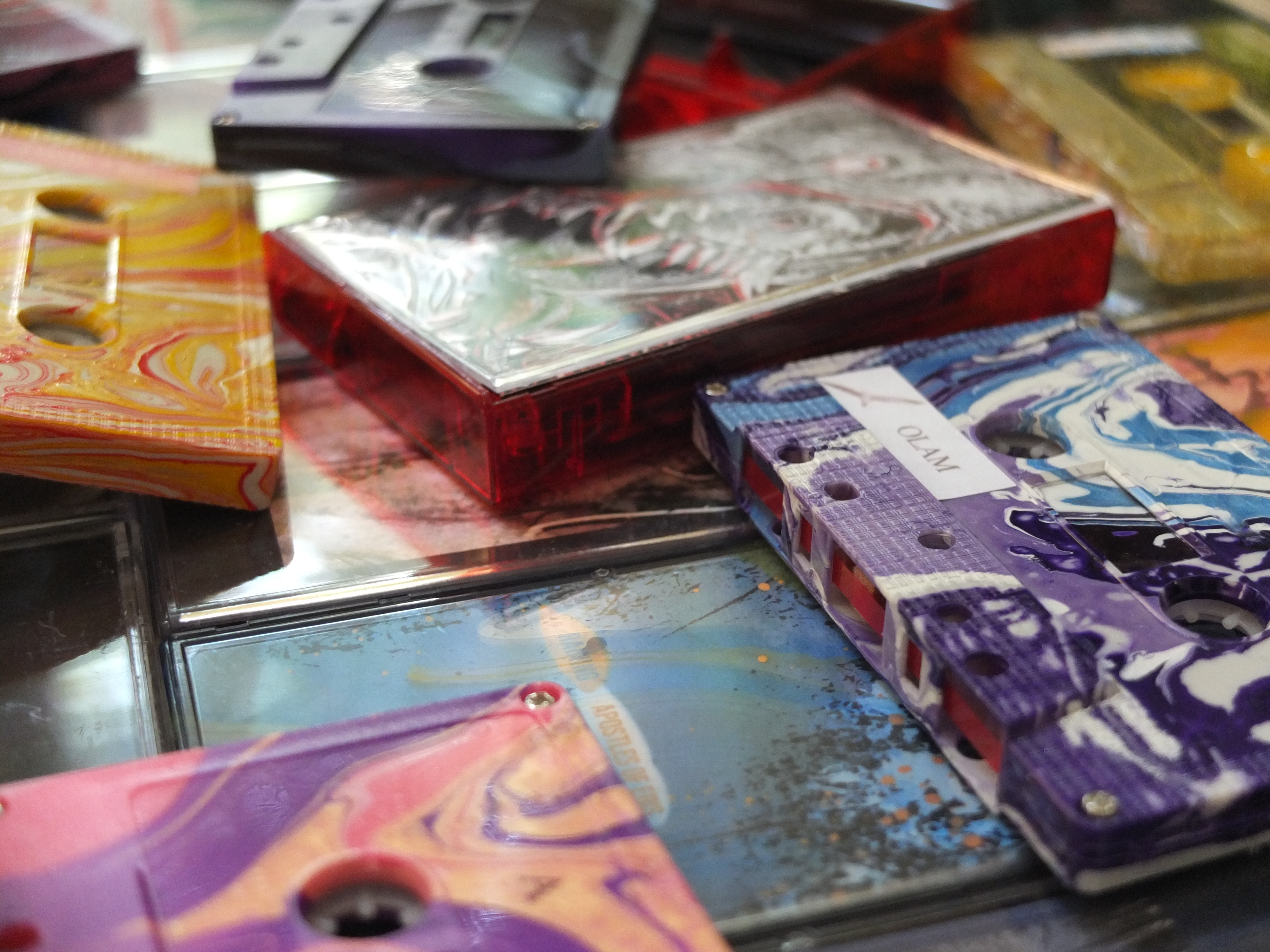
Can the tangible nature of zines be maintained in digital archives? Should it be?
Zines are often praised for their ability to inspire others and such inspiration often comes from thumbing through a physical thing and knowing that others are doing the same. Knowing that someone was passionate enough about their ideas to create a zine and then print, fold, staple, and distribute it to others is a powerful experience that readers feel and connect to when reading a zine. If the material nature of zines helps to inspire, is there any way to fully translate their effects to the digital space? If zines are digitized but never felt, never held, is the experience the same or even comparable? Can digital copies affect readers differently, and perhaps just as powerfully? Or should the digital copy and the original be understood as entirely different things that reach different audiences and have different purposes?
What exactly must one consider in order to efficiently translate zines from the physical to the digital? It must be more than the words on the page; a simple scan and conversion to pdf translates visual cues from physical to digital. What makes zines more than just books or blogs? Much of what make zines different lies in their ability to build an intimate connection to a reader.
As Alison Piepmeier points out, the DIY culture behind zines has a unique way of inspiring those who read them to pursue their own acts of self-expression. The influence of zines might never be a property of them, however. There is not something about paper or the smell of ink that gets people going. But it might be that the physical bond to a zine is important and does get people excited to think more, interact with the author’s ideas, or be inspired to create something and bring it to life too. Paper is an excellent teacher. One can figure out a zine by looking at it and understanding how it was assembled, how it translates ideas into expression. Can we digitally represent the influence of zines as a result of their interactive materiality?
A concept largely used within the art community that touches on the influence of fleeting creative forms is the idea of ‘ephemera’.
Ephemera … is all of those things that remain after a performance, a kind of evidence of what has transpired but certainly not the thing itself. It does not rest on epistemological foundations but is instead interested in following traces, glimmers, residues and specks of things… Ephemera includes traces of lived experience and performances of lived experience, maintaining experiential politics and urgencies long after those experiences have been lived.
José Muñoz
Concerts may be some of the most powerful examples of ephemeral moments of artistic expression that powerfully influence audiences. Zines possess ephemeral qualities too, given their involvement in the spread of subculture and ideology and the way in which they might be connected to a conversation with the creator at an event, a past experience, or the group of friends also reading the same zine. Zines leave lasting impressions upon their readers, sometimes inspiring readers to take personal action thanks to the “experiential politics” of the zine. If the zine can make one reader feel something, that reader might wish to be able to do the same for other readers. But how can the ephemeral effects of art be archived and should they be? What must be considered in order to best represent the relationship of zines to ephemera?
The translation of physical material to digital material is oftentimes tricky given the limitations of digital formats and there may be no way of showing the effects of zines on others and their entanglement with lived experiences of readers, creators, and distributors. Heather Slania argues that in the archiving of art ephemera,
the use of dynamic content, for example, is of critical importance to art librarians. Websites with dynamic content utilize scripting languages (such as Flash and JavaScript) to create interactive experiences for each user accessing the page.
(113)
Zines, as carriers of artistic forms, should be treated with a similar consideration. The website Solidarity! Revolutionary Center and Radical Library archives zines online via www.Archive.Org. These zines are not simply scanned and included on the site as separate pdfs for each double page. They are embedded dynamically, allowing users to flip through the pages as though reading a physical booklet, with the option of even downloading an epub file to transfer to an e-reader. This format creates a more interactive experience, recreating – as best as can be expected online–a sense of interacting with subculture, and with community through the flipping of pages. So, offering a digital experience that feels interactive, even if it is not the same sort of interaction one has with a physical object may be worth considering. Is this a properly intimate and inspiring relationship, however? Are page turning animations enough to recreate the nature of a zine?
Unlike most books, zines are heavily involved in a DIY cute and paste or handmade aesthetic. It is part of their genre and this is especially true of punk zines. This aesthetic exists outside of traditional materials, formats, and organization of words on a page. Scanning zines can reproduce the composition of words on a page, and even colours, but what of their literal feel? If zines are digitally reduced to 2-dimensional untouchable files, how can small details such as glued on paper, and texture, be conveyed? Zines, it is worth remembering, are often not mass-produced and might feature handmade touches and embellishments are individual and different on each copy of the zine. That variability and the uniqueness of each copy cannot be captured by an archive that represents one version as if it were representative of all versions.
This is not all bad news of course. As newsprint zines, Slug and Lettuce and HeartattaCk don’t fare well when a drink is spilled on them. I’m not sure that an e-reader or a phone does much better though. Both the paper and the digital are portable enough. The digital won’t rip, though, and might be less likely to end up a dog toy.
There has been much debate in the archiving community over the detail and depth of archival descriptions to go along with archived materials. Jennifer Douglas observes that early archival writing insisted that “the archivist was supposed to be objective in all respects, not an active shaper of the archives he or she cared for, but a neutral custodian.” But this approach has since been questioned given the role of an archivist in organizing, shaping and cultivating a collection. Douglas argues for a more involved and honest account of the archivist’s role in defining what an archive means and how it is read. The question remains, how best to guide or structure a reader’s experience of a digital archive?
Perhaps one approach is to include small details about zine materiality. The Solidarity! archive takes advantage of tags, and subject filters, but the user is hard-pressed to find any descriptions of what it feels like to hold the zine, or personal interactions with the zine by its owner. While pdf files of zines certainly convey text and photo in their most basic sense, archival description may comment on the materials used, perhaps providing, at minimum, an account of what the original zine is like as a physical object. Such a practice of describing the zine might include a personal account of the zine’s effect on the archivist, pointing toward some of its ephemeral qualities.
Perhaps there needs to be more than one account of the physical nature of the zine. Maybe multiple accounts from different people will help to get at all the various ways different individuals might experience a particular zine and its physical size, shape, and feel. David Tkach and Carolyn Hank stress the importance of zines as “a primary method of communication for members of particular political movements” (12). I can remember that the zines I read most passionately were those where I knew the author, either because I met them at a gig or had traded zines through the mail.
But perhaps the social nature of zine culture is not necessarily lost or maybe it doesn’t need to be lost. Maybe the creation of digital archives can be a collective activity that fosters culture and a community-based atmosphere that is comparable to what is involved in the creation and circulation of physical zines.
Finally, does digitizing zines have to be a ‘perfect’ process, or is it enough to try conveying materiality to the best of the archivist’s ability through archival description? Does attempting to perfectly recreate a zine digitally go against the imperfect DIY nature of their creation? Or can digital zine archives become collaborative communities in the spirit of their physical counterparts? At some level, I suspect, the goal should not be to reproduce the feel and nature of the original zine. That can’t be done. But perhaps a digital archive can still be an engaging thing that creates a bond with a reader and provides accounts of what the original is like, even if it cannot reproduce exactly what it is like to read and hold the original. The goal is to archive, after all, not replace the existence of zines.
By Francesca Gimson
In 2017, I accidentally went off my antidepressants for three days. I’d prepared for a lapse back into depression. Instead, I found myself enraged by everything: traffic, strangers’ tattoos, airplanes in the sky, I wanted to punch birds. Then I remembered. This was how I felt all through my early twenties. So was Born Against – meaning whatever portion I contributed – just the product of a serotonin imbalance?
Sam McPheeters, Mutations: The Many Strange Faces of Hardcore Punk
 Punk Pedagogy